English
 中文简体
中文简体 русский
 Español

Technical Characteristics: The machine tool is a single-column vertical guideway structure. The colu...
See Details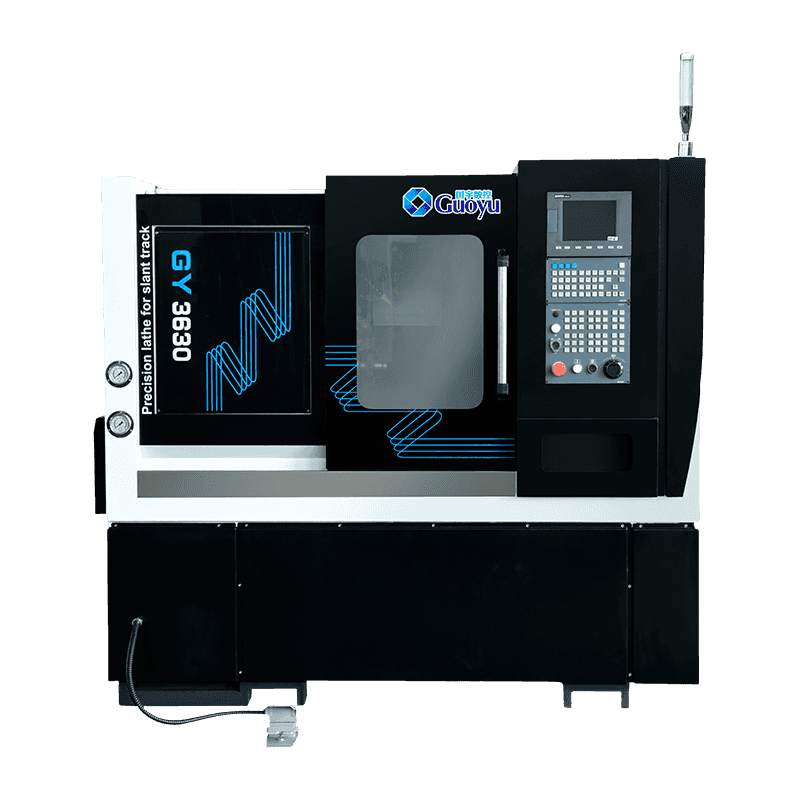
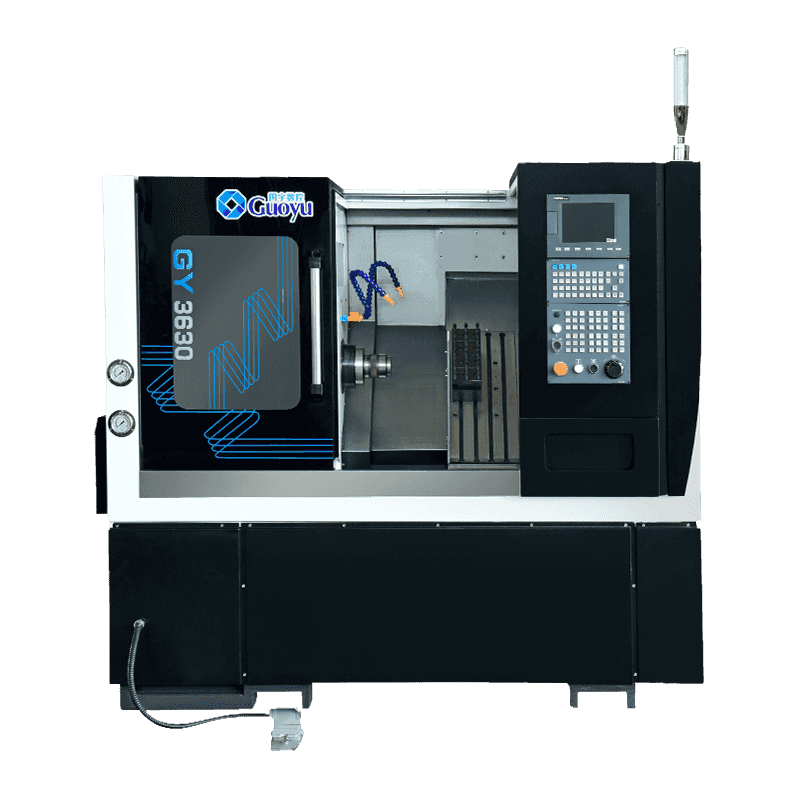
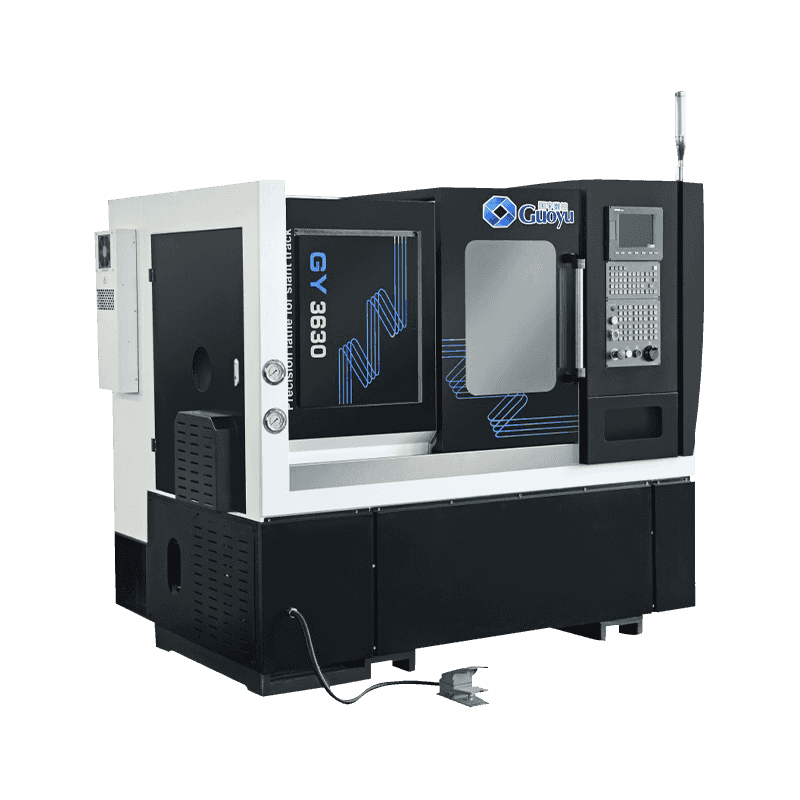
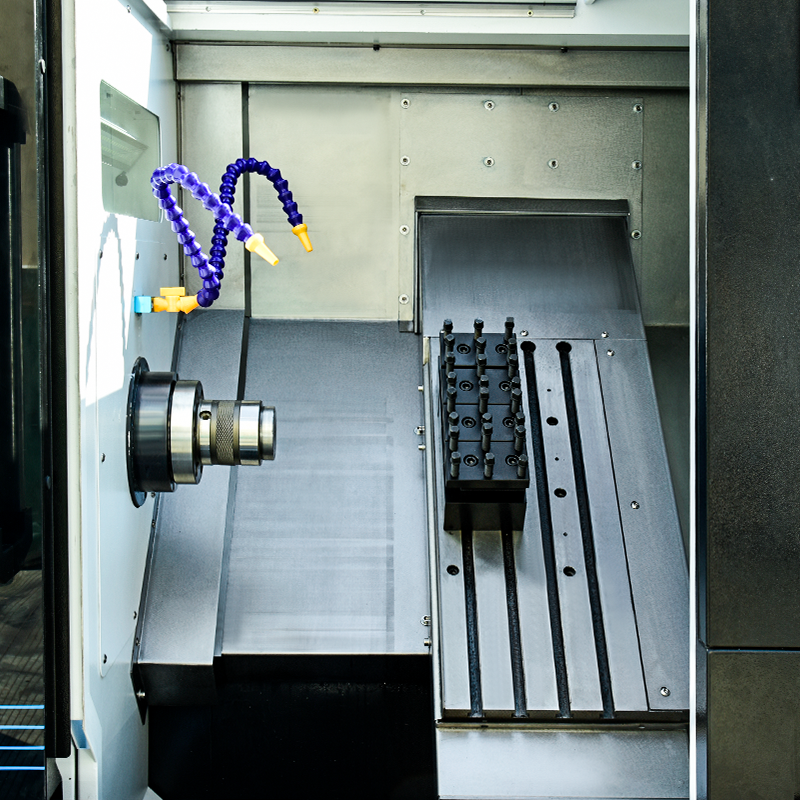
The Conjoined 45° Oblique Gauge Cutter Precision CNC Lathe is a really practical machining solution built for steady, un-fussy turning jobs on the shop floor. Going with a 45-degree slant bed layout makes a big difference because it gives operators easy access to the workspace and lets metal chips slide away naturally without clogging things up. The main body is poured from dense resin sand castings, which gives the machine plenty of structural rigidity and helps dampen annoying tool vibrations when you are making heavy cuts.Clamping parts is pretty fast and accurate thanks to the hydraulic collet system, which goes a long way in trimming back your load times and keeping production cycles moving along smoothly. We also tossed in a fully sealed electrical cabinet with built-in air conditioning to keep the main CNC controller safe from stray coolant mist and harsh workshop dust. With straightforward, panel-based hydraulic dials, easy-access maintenance layouts, and fully integrated mechanical and fluid lines, this CNC lathe is a completely solid choice for turning out precision components or handling continuous shifts in a busy shop.
It handles your compact metal components just fine—things like pins, sleeves, bushings, spacers, and threaded parts where you just need repeatable turning accuracy and decent surface finishes without any fuss.
A regular choice for machining shaft pieces, connectors, hubs, and other everyday turned parts that go straight into vehicle manufacturing and parts supply setups.
A pretty practical option for adapters, valve blocks, couplings, and threaded connection pieces where keeping your dimensions consistent and getting a reliable finish actually matters.
Plays nice with batch production of small metal components used across electrical hardware, basic fastening systems, instrument fittings, and general precision assemblies.
You can throw bushings, collars, stepped shafts, flanges, and similar turning jobs at it whenever you need to turn out mechanical equipment parts or standard industrial pieces.
Thanks to the spindle layout and gang tooling setup, the machine is a solid match for feeding bar stock and churning out short parts back-to-back in busy volume production settings.
The inclined bed layout lets metal chips fall away naturally from the cutting zone, keeping the work area way cleaner during production and making it a lot easier for operators to reach in for setups or tool changes.
Poured with a solid cast bed, the machine handles continuous turning work with plenty of raw rigidity, which goes a long way in cutting down on tool vibration and helping you keep your part quality steady.
Going with a gang tool block is a really practical choice for small turned components and repeat jobs, keeping tool changes direct and trimming down your cycle times from one part to the next.
Equipped with a hydraulic chuck and collet system, the machine gives you a steady grip on your workpieces, supporting solid clamping performance and smoother runs when you are pushing through long batch orders.
Cranking out speeds up to 4000 rpm, the spindle is a fine match for machining bar stock, sleeves, pins, and fittings where you just need clean turning finishes and decent cycle times on small-to-medium parts.
The X and Z axes run on ball-type linear guideways to give you quick response and precise axis travel, which keeps your feed rates stable and your positioning predictable during repetitive machining shifts.
The electrical cabinet uses a fully sealed enclosure backed up by cooling support, helping shield the CNC controller from messy shop dust and keeping the machine running fine in hot or humid environments.
From the button layout on the control panel to the access hatches for quick upkeep, the machine is built for regular shop floor use, helping operators handle daily work more comfortably and keeping routine maintenance un-fussy.
| Projects | unit | GY-3630 | |
| PROCESSING CAPACITY | Maximum turning diameter of bed | mm | 440 |
| Maximum rotary diameter of support plate | mm | 180 | |
| Maximum machining length | mm | 300 | |
| MAIN SHAFT | Spindle end form | \ | A2-5 |
| Diameter of main shaft through hole | mm | 45 | |
| Maximum rod passing diameter | mm | 35 | |
| Maximum spindle speed | r/min | 4000 | |
| Spindle shift mode | \ | Servo infinitely variable speed | |
| Main motor power | kw | 5.5 | |
| Chuck type | \ | Hydraulic chuck (standard) hydraulic chuck (optional) | |
| Chuck size | mm | 56 | |
| FEED | X-axis stroke | mm | 700 |
| Z-axis stroke | mm | 350 | |
| X-axis fast-moving velocity | m/min | 22 | |
| Z-axis fast-moving velocity | m/min | 24 | |
| X-axis motor torque | N·m | 6 | |
| Z-axis motor torque | N·m | 6 | |
| Type of rail | \ | Ball guideway | |
| X-axis guide rail specifications | mm | 30 | |
| Z-axis guide rail specifications | mm | 30 | |
| X-axis made screw specification | mm | 2510 | |
| Z-axis made screw specification | mm | 3210 | |
| TOOL REST | Tool rest type | \ | Platoon knives |
| Square tool/Boring tool size | mm | 20*20/φ25 | |
| TAIL SEAT | Tail seat form | \ | \ |
| Tail seat sleeve taper | \ | \ | |
| Tail seat sleeve diameter | mm | \ | |
| Tail seat sleeve stroke | mm | \ | |
| OTHER | Machine tool size (length* width* height) | mm | 2000*1400*1800 |
| Machine weight | kg | 2200 | |
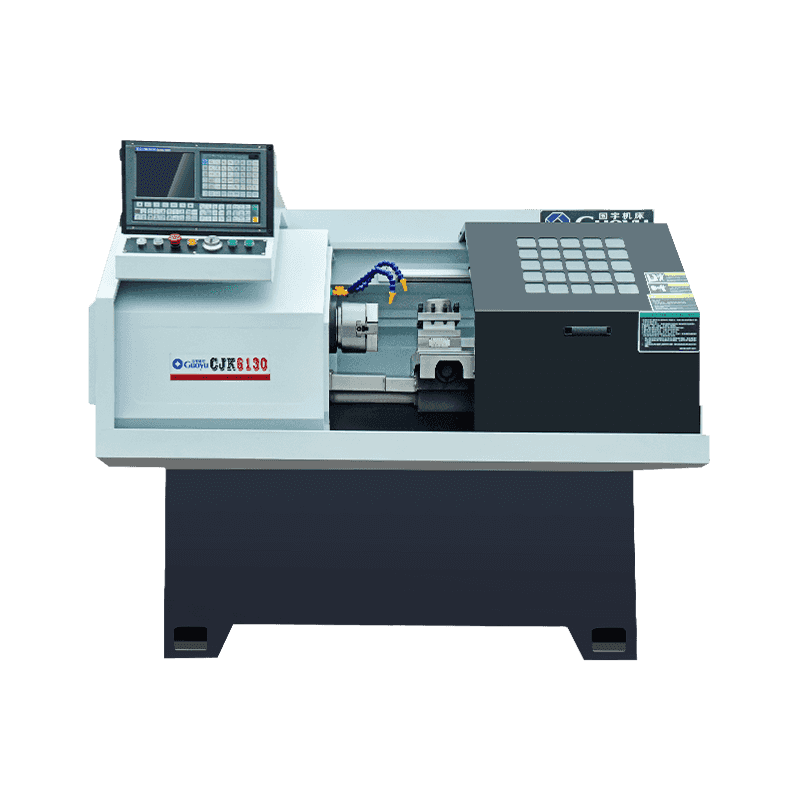
Technical Characteristics: The machine tool is a single-column vertical guideway structure. The colu...
See Details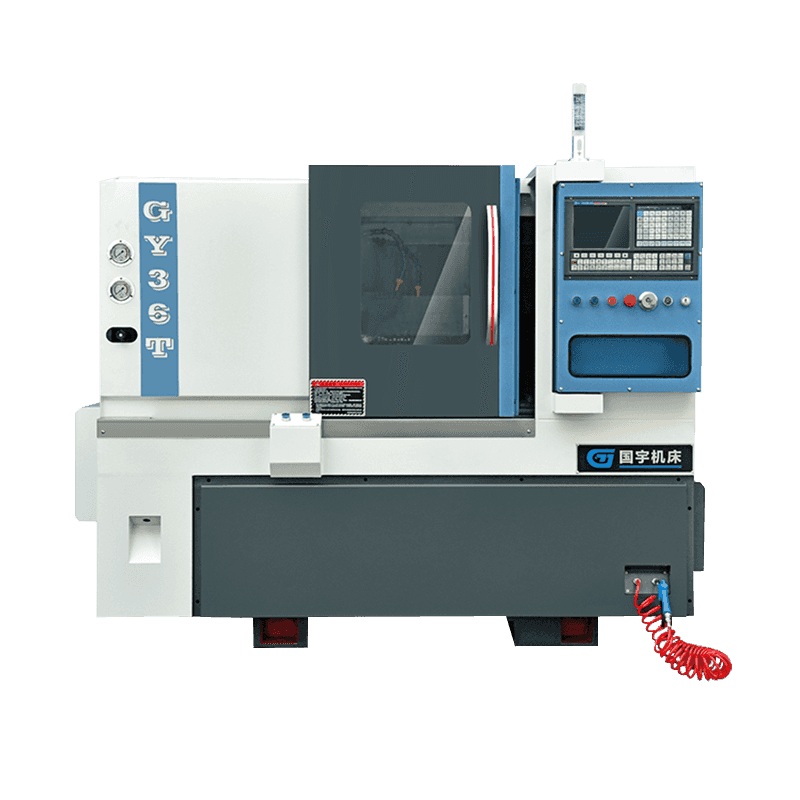
Technical Characteristics: The CNC machine tool for inclined beds adopts the domestic or imported hi...
See Details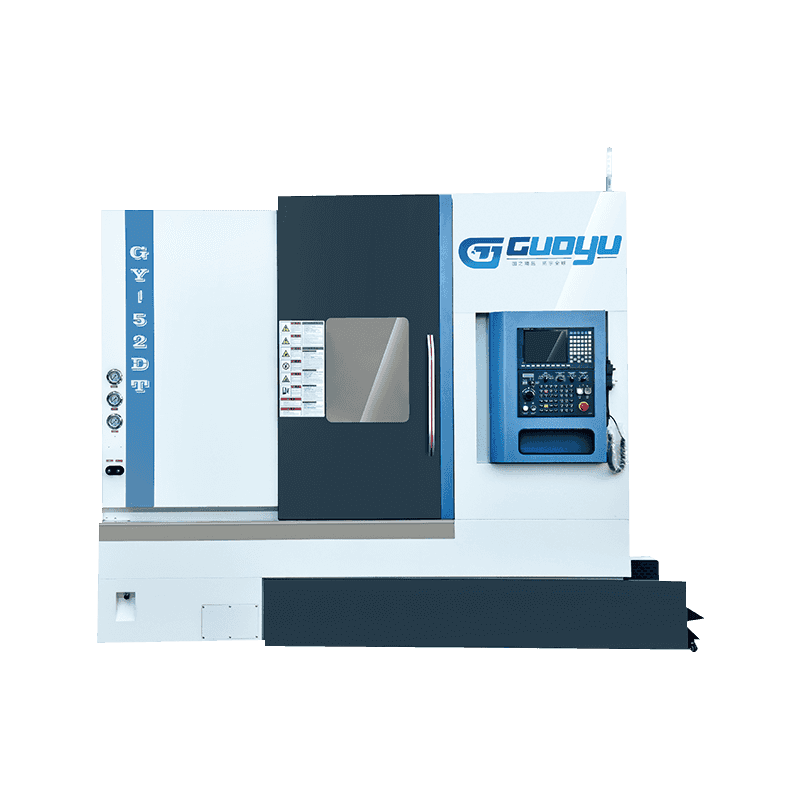
Technical Characteristics: The CNC machine tool for inclined beds adopts the domestic or imported hi...
See Details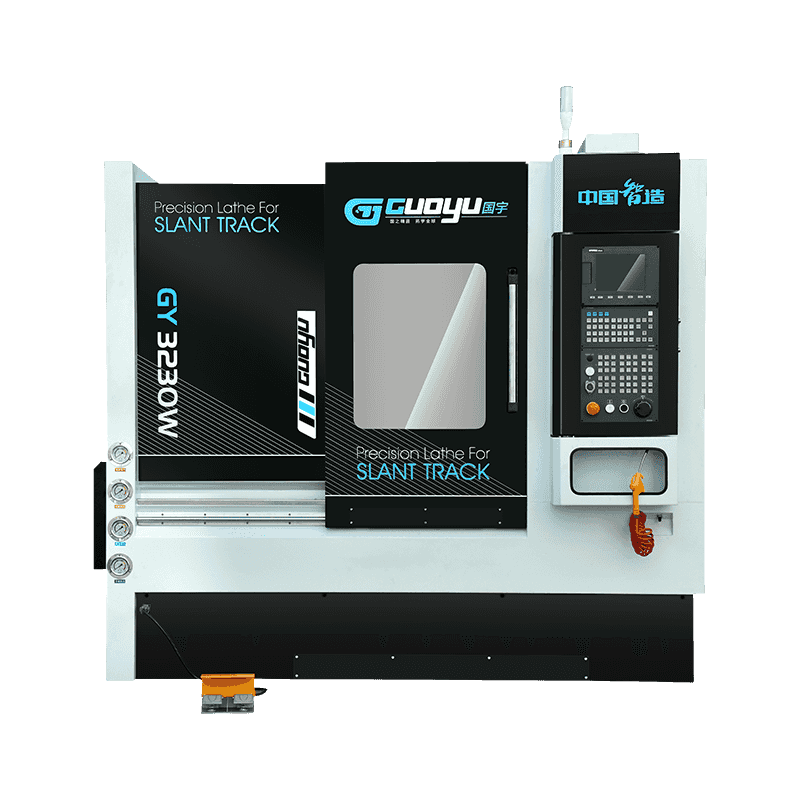
Technical Characteristics: The machine tool is of high precision, and the spindle is supported by hi...
See Details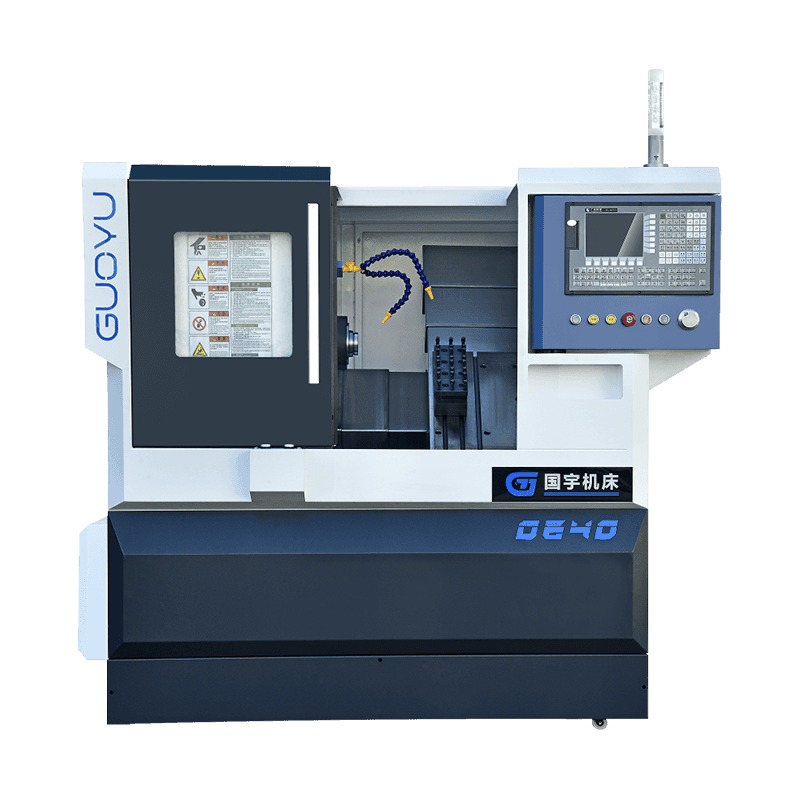
Introducing our Optional Control System CNC Lathe for Metal Processed, a sophisticated and reliable ...
See Details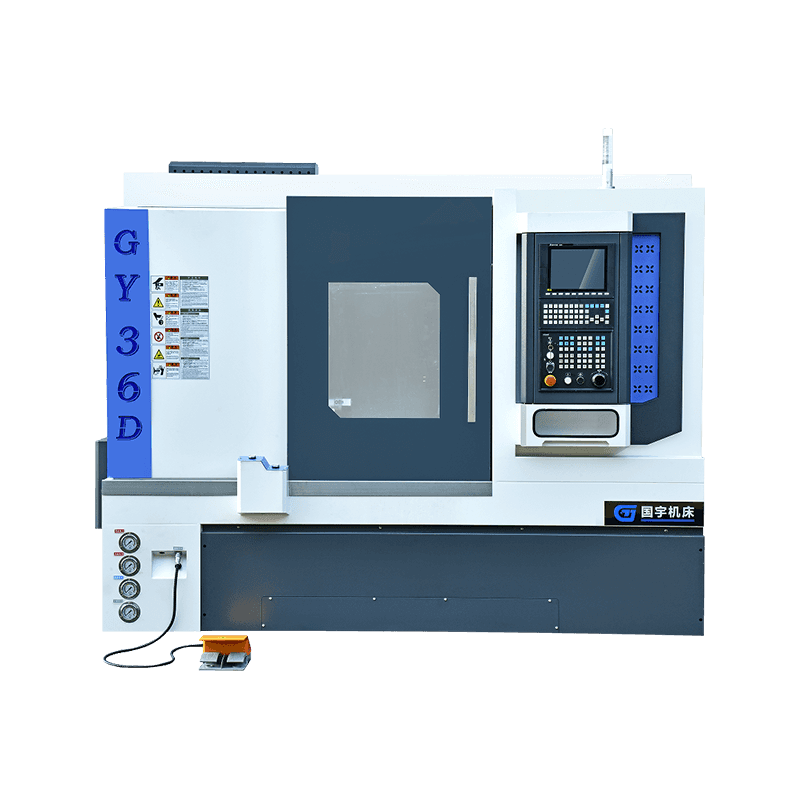
Technical Characteristics: All lathes are integrally cast with 250 materials to ensure processing ri...
See Details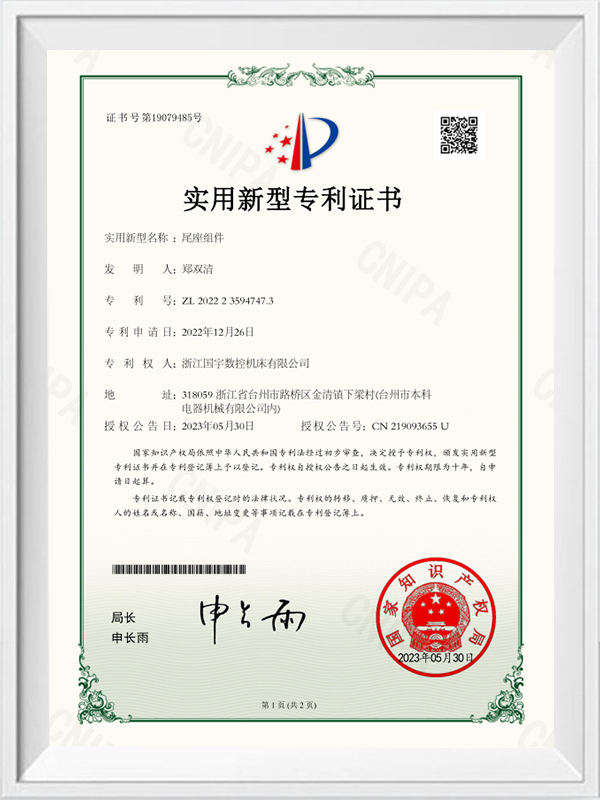
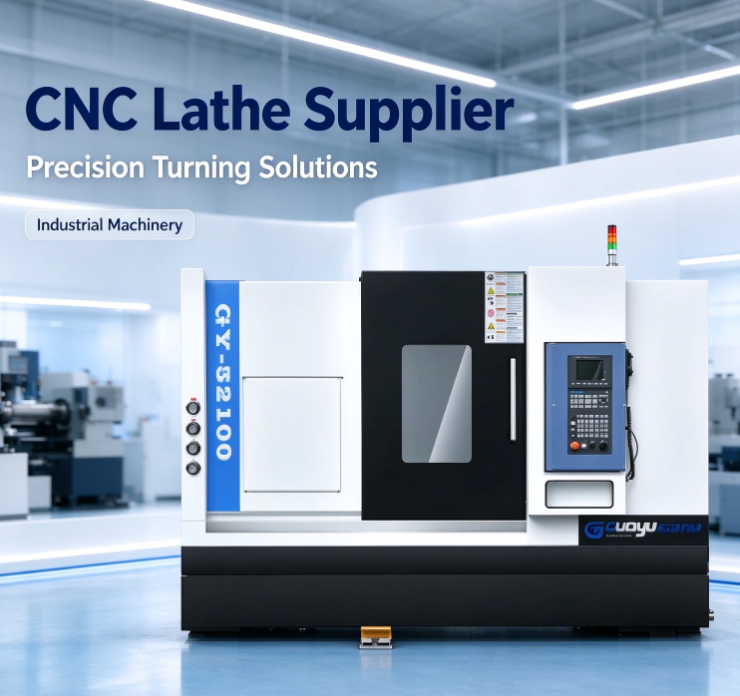
Choosing a CNC lathe supplier takes more than comparing machine features and prices. A CNC lathe sits inside a larger production process. It shapes workflow...
READ MORE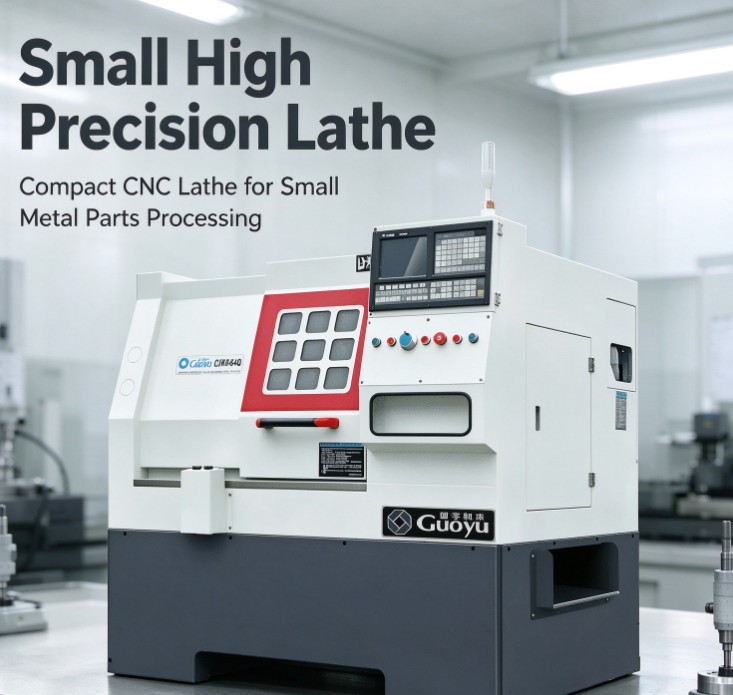
Small components quietly carry a lot of weight across manufacturing. They show up in instruments, mechanical assemblies, electronic equipment, medical devic...
READ MORE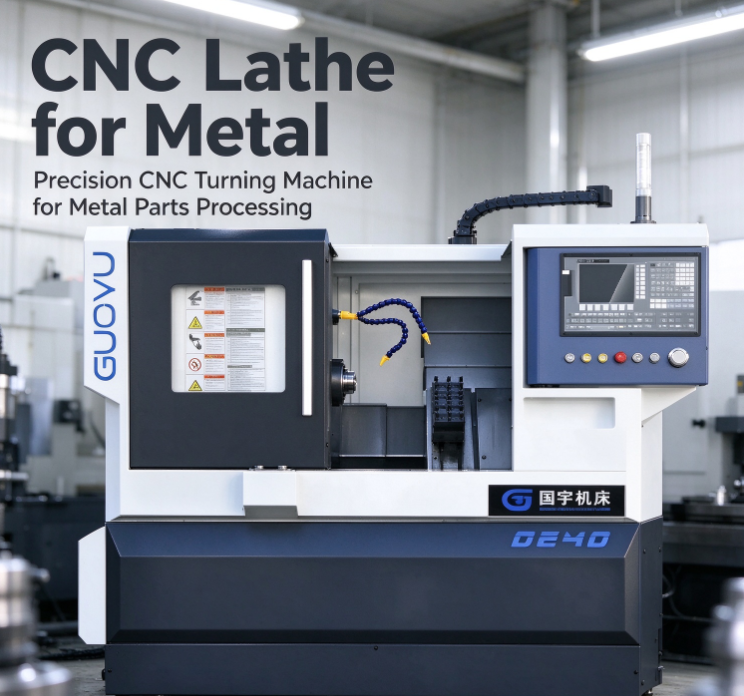
Metal parts show up in almost every corner of modern manufacturing. They form the shafts inside machines, the fittings in plumbing systems, the connectors i...
READ MOREA high-speed CNC lathe from Guoyu CNC is a machine tool designed to rotate a workpiece at significantly higher revolutions per minute than a conventional lathe. We're not talking about a hobbyist's bench lathe. These are industrial machines built for production environments where cycle time reduction is the difference between winning a contract and losing it.
The spindle is the heart of that machine. It holds the workpiece or the tooling (depending on the lathe type) and delivers rotational power. On a flat bed CNC lathe—the traditional horizontal design where the bed is a flat, box-like casting—the spindle sits at the headstock and takes enormous radial and axial loads during high-speed cuts.
The question people actually search for isn't just “what's the max speed?” It's “Can I run that speed all day without destroying my spindle bearings?” And the answer involves balancing lubrication, heat management, and duty cycles—not just reading a spec sheet.
The higher-end slant bed models—designed for aerospace and automotive component work—can reach 6000 RPM on some variants, though those often use different bearing configurations (ceramic hybrid bearings instead of standard steel).
But here's the catch that doesn't fit on a brochure. That maximum speed is a “never-exceed” rating, not a “sustain this for eight hours” rating. The difference is thermal. At 4500 RPM, the spindle bearings generate significant heat. If the machine doesn't have active cooling (oil chiller or through-spindle coolant), you'll see thermal growth in the spindle shaft. That changes tool position relative to the workpiece. Parts start coming out of tolerance after forty minutes of continuous running.
What Western machinists actually report
In practice, shops running flat bed CNCs for production work often cap their programmed maximum spindle speed at 80% of the machine's rating. So a 4000 RPM machine runs at 3200 RPM for long production runs. They reserve the full 4000 RPM for short bursts—finishing passes or soft materials like aluminum where heat buildup is lower.
So what's the real answer to “maximum spindle speed achievable”?
Now let's focus on the second topic: how to extend spindle service life when you're running a flat bed CNC lathe at those high speeds.
This matters because spindle replacement on a flat bed lathe is brutal. You're looking at 8,000to8,000to20,000 for a new spindle assembly, plus a week of downtime. Extending spindle life by even two years pays for itself.
The job shop running mixed materials
A typical Western job shop runs steel, stainless, aluminum, and maybe some brass or plastic all in the same week. Each material requires different spindle speeds. The operator gets busy and forgets to adjust lubrication parameters between jobs.
Here's the fix that takes ten minutes and saves thousands: program a “spindle warm-up” routine into every tool change. Before the spindle hits 4000 RPM for a aluminum job, the machine runs at 1500 RPM for 90 seconds with no load. That circulates lubricant to the bearings gradually. Cold starts to full speed are what kills bearing cages.
This is where flat bed lathes suffer compared to slant bed designs. A flat bed has the spindle axis parallel to the floor. Gravity pulls cutting fluid and metal chips down onto the bed—but also into the spindle nose seal if the seal is worn. Over time, contamination kills bearings.
The solution isn't complicated but it's often ignored: install an air purge system on the spindle nose. A small flow of clean, dry air (15–20 PSI) exiting through the labyrinth seal keeps coolant and chips out.
The shop with inconsistent power quality
This one surprises people. Spindle life depends on clean power. A flat bed CNC lathe's spindle drive (the VFD or servo amplifier) converts incoming AC to a variable frequency output. If the shop has voltage sags, spikes, or harmonic distortion, the drive compensates by changing the output to maintain speed. Those constant micro-adjustments create torque ripple in the spindle motor. The ripple transfers to the bearings as vibration.
At low speeds (under 1000 RPM), the ripple doesn't matter. At 4000 RPM, it's destructive over months.

Zhejiang Guoyu CNC Machine Tool Co., Ltd. relies on rich experience, professional technology and advanced methods to ensure the quality of its products, so that customers can enjoy more professional and thoughtful service.
 [email protected]
 +86-15356565970
 Xialiang Industrial Area, Luqiao District, Taizhou City, Zhejiang Province, China
Copyright © Zhejiang Guoyu CNC Machine Tool Co., Ltd. All Rights Reserved.

Wholesale Conjoined 45° Oblique Gauge Cutter Precision CNC Lathe Suppliers