English
 中文简体
中文简体 русский
 Español

Technical Characteristics: The machine tool is of high precision, and the spindle is supported by hi...
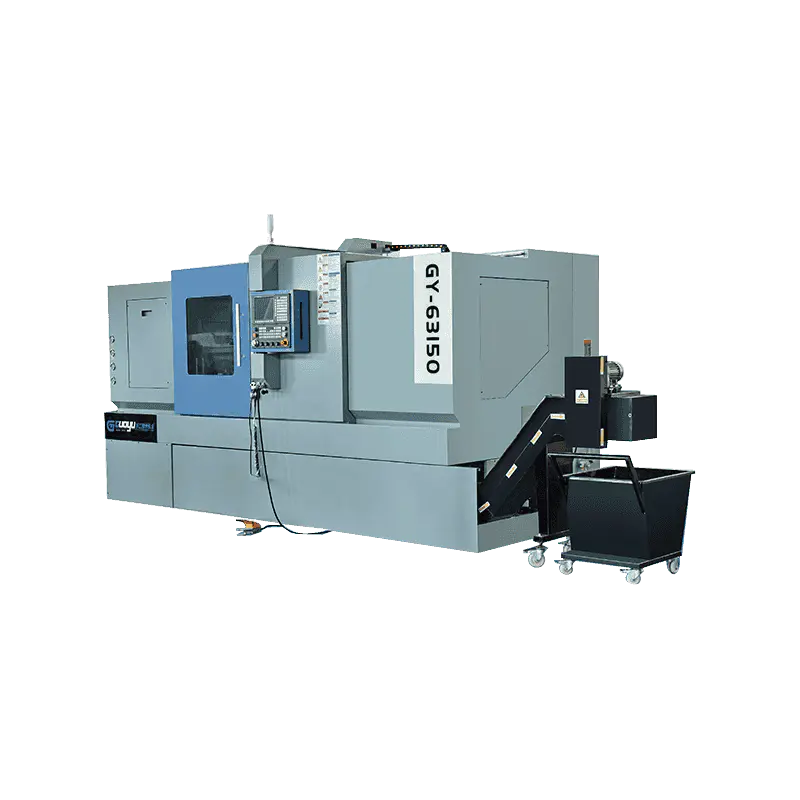
See DetailsSurface finish problems have a way of showing up at exactly the wrong moment — during final inspection, during client review, or after a part has already gone through post-processing that should not have been necessary. Tool marks that won't polish out. Waviness across a long shaft that shows up under raking light. Chatter patterns that repeat at intervals corresponding to spindle vibration, not cutting parameters. These aren't random outcomes. They're predictable consequences of machining systems that can't maintain the stability and precision that consistent surface quality demands. For manufacturers working on large or heavy components, a Heavy Duty CNC Lathe Machine addresses the root causes of surface finish inconsistency in ways that tooling changes and parameter adjustments alone cannot — because the machine structure itself is where surface quality ultimately originates. Understanding that relationship — between machine design, dynamic stability, and surface finish outcome — is what separates equipment investment decisions that solve real production problems from those that simply add capacity without improving quality.
Surface finish in CNC turning is quantified through roughness parameters — Ra being a commonly specified one — that describe the average deviation of the surface profile from a mean line. A lower Ra value indicates a smoother surface. But Ra is an output, not a setting. It results from the interaction of cutting speed, feed rate, tool nose geometry, workpiece material properties, and — critically — the dynamic behavior of the machine tool during the cut.
The distinction matters because two machines running identical cutting parameters on identical materials will produce different surface finishes if they differ in structural rigidity, spindle precision, and vibration characteristics. Operators who chase surface quality by adjusting feeds and speeds without addressing machine-level factors are working on the wrong variable.
Key factors that determine surface finish outcome in CNC turning:
When a cutting tool engages a workpiece, it generates forces in multiple directions simultaneously. The tangential force drives spindle torque requirements. The radial force pushes tool and workpiece apart. The axial force loads the feed system. In a rigid machine, these forces are absorbed by the structure without causing measurable deflection or vibration. In a less rigid machine, the same forces cause the tool and workpiece to move relative to each other — and that relative motion is recorded directly on the machined surface as waviness, chatter, or irregular roughness.
Heavy machine frames reduce this deflection through several mechanisms:
The connection between machine mass, structural rigidity, and surface finish becomes clearly visible in long-bed operations on large workpieces — shaft turning, roller grinding preparation, large flange facing — where the distance between spindle and tailstock creates a longer moment arm for cutting forces to act on.
In many practical heavy turning scenarios, yes. Spindle runout — the deviation of the spindle axis from a true straight line during rotation — directly imposes geometric error on the machined surface. A spindle with significant runout produces a surface that appears smooth at the micro-scale but has systematic form error at the macro-scale: the part is slightly oval, or the bore is slightly tapered, or the surface has a periodic waviness that corresponds to spindle rotation.
Spindle precision factors that affect surface finish:
For large-diameter turning — the core application of heavy duty lathes — spindle runout effects are amplified because small angular deviations translate to larger surface deviations at greater radii. A spindle with adequate precision for small-diameter work may produce visible surface errors on components with large turning diameters.
Chatter is self-excited vibration that develops during cutting when the energy input from the cutting process exceeds the damping capacity of the machining system. Once initiated, it amplifies rapidly — each cut removes material that was left wavy by the previous revolution, creating a varying chip thickness that drives varying cutting force, which drives vibration, which creates more waviness. The result on the machined surface is a distinctive pattern of regular ridges that corresponds to the vibration frequency.
The threshold at which chatter initiates depends on the relationship between cutting stiffness and machine dynamic stiffness. Higher machine dynamic stiffness raises the stability limit — allowing deeper cuts, higher feed rates, and larger nose radii before chatter develops.
Machine design factors that improve chatter resistance:
A New CNC Heavy Duty Lathe addresses chatter through both structural design improvements and control system capabilities that older machines don't have.
Structural improvements in modern designs:
Control system contributions to chatter reduction:
The feed rate per revolution is one of the primary determinants of theoretical surface roughness. In practice, the actual feed rate delivered by the machine's servo system deviates from the programmed value — and those deviations are recorded on the machined surface as irregular roughness superimposed on the theoretical feed marks.
Sources of feed system error that affect surface finish:
Modern CNC controls address these error sources through:
Turning long shafts, rollers, spindles, and similar elongated components exposes every limitation of the machine tool. The workpiece supported between centers over a long span is a flexible beam — it deflects under cutting force, and that deflection changes along the length as the tool traverses. Without adequate machine rigidity and control, the turned diameter varies along the length, and surface finish varies with it.
Heavy lathe design elements that address long workpiece challenges:
For large roller and shaft turning used in steel mills, paper mills, printing machinery, and power generation, these factors directly affect the functional quality of the finished component. A roller with diameter variation along its length creates uneven nip pressure. A shaft with surface waviness creates vibration in rotating equipment. These aren't cosmetic issues — they're functional failures with measurable consequences for downstream application performance.
| Machine Characteristic | Effect on Surface Finish | Relevant for Heavy Turning |
|---|---|---|
| Bed rigidity and mass | Reduces vibration amplitude under cutting load | High — large workpieces generate high cutting forces |
| Spindle runout | Directly produces diameter variation and waviness | High — amplified effect at large diameters |
| Spindle bearing thermal stability | Affects dimensional consistency over long production runs | High — especially for precision large components |
| Servo system accuracy | Determines feed consistency and positional accuracy | High — feed marks directly visible on finish |
| Chatter resistance (dynamic stiffness) | Determines stable cutting depth and feed range | High — heavy cuts require high dynamic stiffness |
| Guideway design (box vs linear rail) | Affects damping and load capacity | High — box guideways preferred for heavy turning |
| CNC control resolution | Determines how small a position error can be detected | Moderate to high — affects feed accuracy |
| Tailstock rigidity | Affects vibration of between-centers workpieces | High for long shaft work |
| Thermal compensation | Reduces dimensional drift during long production runs | Moderate to high |
Many manufacturers accept mediocre turning surface finish as inevitable and compensate with post-processing — grinding, polishing, or honing to bring the surface to specification. This approach carries costs that aren't always fully accounted for:
A machine capable of producing acceptable surface finish directly from turning — without requiring grinding as a corrective step — eliminates these costs entirely for components where grinding isn't required for other reasons. For production lines where large volumes of components currently go through grinding primarily to correct turning surface finish, the cost reduction from eliminating this step is substantial.
The calculation that justifies investment in a New CNC Heavy Duty Lathe often includes this post-processing cost reduction explicitly — comparing the cost of grinding operation elimination against the equipment investment and its depreciation over the tool's expected life.
When evaluating a CNC Lathe Supplier or selecting a New CNC Heavy Duty Lathe for surface finish-sensitive applications, the right questions go beyond standard specification sheets.
Questions that reveal actual surface finish capability:
A CNC Lathe Factory that understands surface finish requirements will answer these questions with specifics rather than generalities. A supplier that redirects to standard specification parameters when asked about dynamic performance is communicating something important about their engineering depth.
A machine that produces a fine surface finish when new but deteriorates over time creates a different kind of problem — inconsistency between production batches, gradual degradation in customer satisfaction, and eventually the same surface finish problems that motivated the equipment investment originally.
Indicators of long-term stability in machine design:
Asking a CNC Lathe Supplier about their maintenance intervals, their guideway wear specifications, and their spindle replacement or remanufacturing support provides information about expected long-term performance that initial specifications don't reveal.
Surface finish quality in CNC turning is not primarily a parameter optimization problem. It's a machine capability problem — and the solution is a machine whose structural design, spindle precision, guideway system, and control accuracy together create the dynamic stability that consistent surface finish requires. Tooling improvements and parameter optimization contribute at the margin, but they cannot compensate for fundamental limitations in machine stiffness, spindle runout, or vibration control.
For manufacturing operations processing large, heavy, or precision components where surface finish consistency directly affects product quality and downstream processing cost, investing in a capable heavy duty CNC lathe delivers measurable returns through reduced post-processing, lower scrap rates, and the ability to meet surface finish specifications reliably rather than occasionally. The equipment decision is an engineering decision as much as a financial one — and making it well requires understanding the technical factors that determine surface finish capability, not just comparing standard specifications across competing machines. For engineering teams, production managers, and procurement decision-makers evaluating new or replacement CNC turning equipment with surface finish performance as a priority, Zhejiang Guoyu CNC Machine Tool Co., Ltd. designs and manufactures Heavy Duty CNC Lathe Machines for demanding industrial turning applications, with technical capability covering large workpiece turning, precision surface finish requirements, and the structural and control system design that long-term production consistency demands. Their engineering team can discuss application-specific requirements — workpiece dimensions, surface finish targets, material properties, production volume — and provide technical recommendations grounded in machine design rather than generic specifications. Reaching out to a CNC Lathe Factory with genuine technical depth in heavy turning is the starting point for an equipment investment that solves the surface finish problem rather than deferring it.
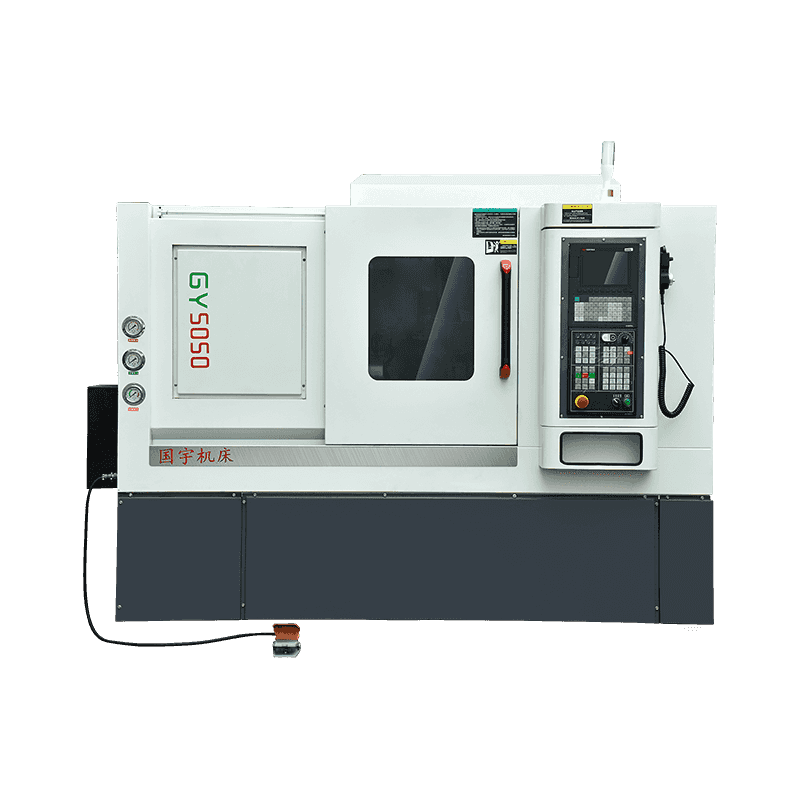
Technical Characteristics: The machine tool is of high precision, and the spindle is supported by hi...
See Details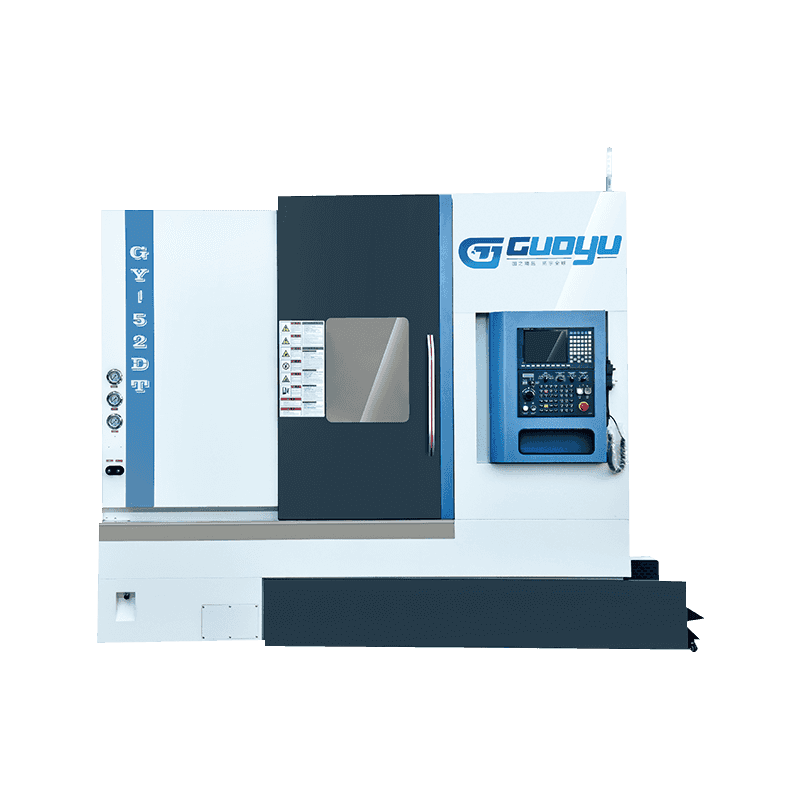
Technical Characteristics: The CNC machine tool for inclined beds adopts the domestic or imported hi...
See Details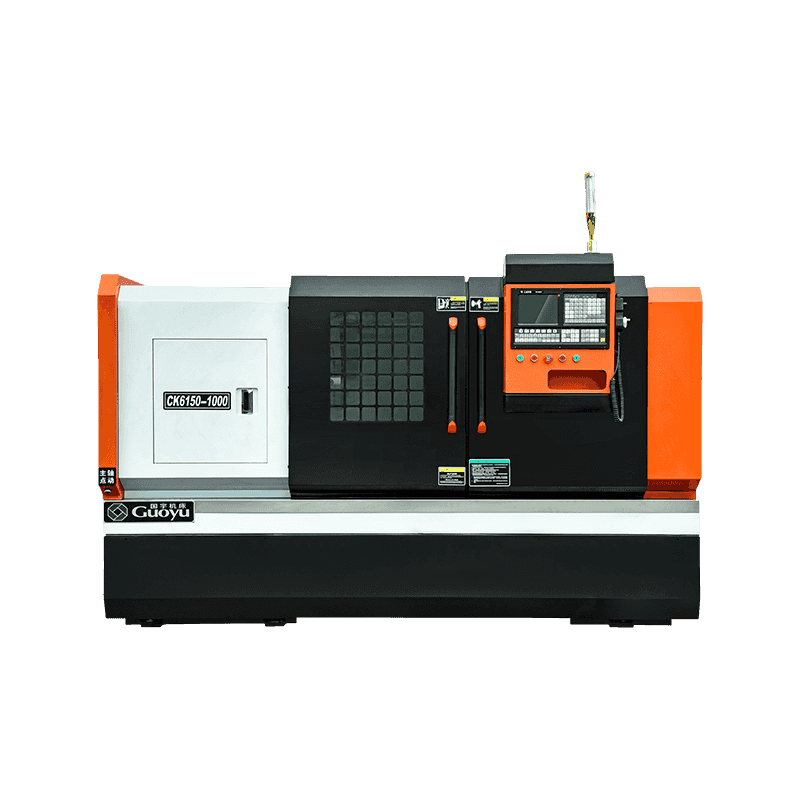
The Heavy Cutting Hard Guideway CNC Lathe For Metal Cutting is a really tough, heavy-duty machining ...
See Details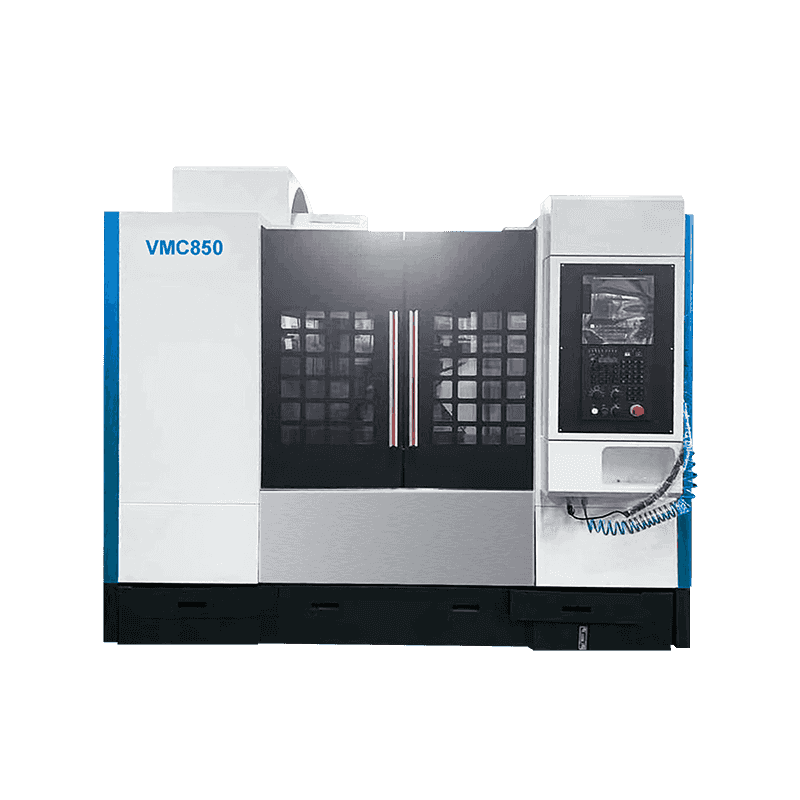
Technical Characteristics The machine tool is a single-column vertical guideway structure. The colum...
See Details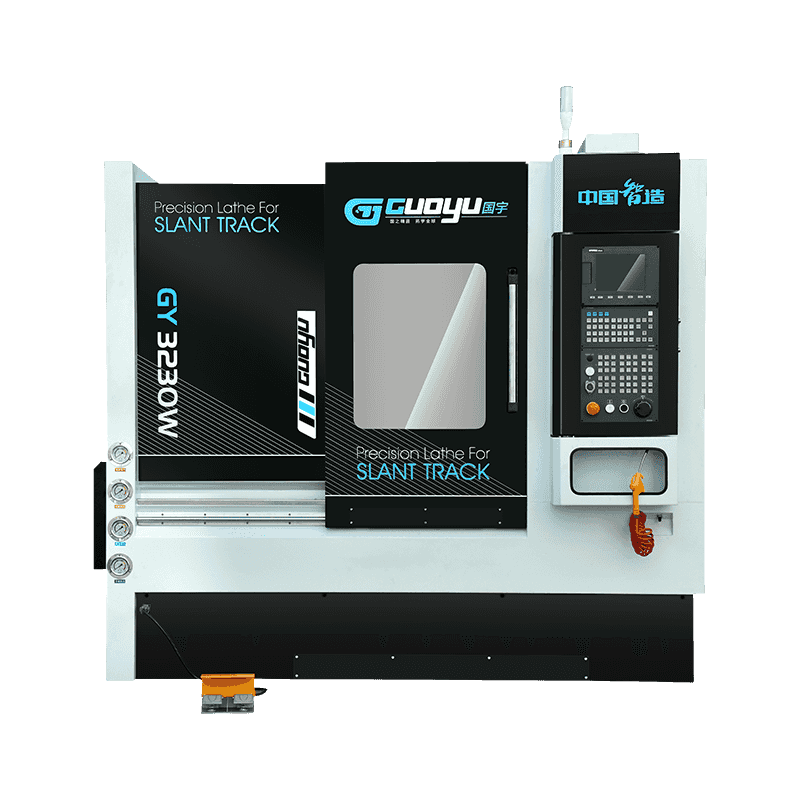
Technical Characteristics: The machine tool is of high precision, and the spindle is supported by hi...
See Details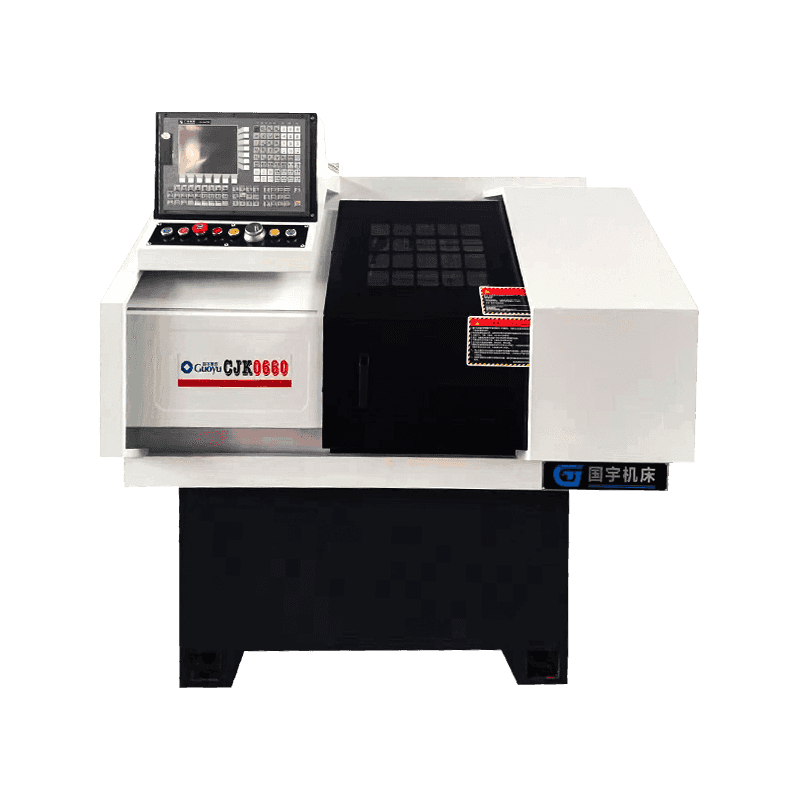
The Custom Precision Line Rail Precision CNC Lathe is just a really practical, compact machining sol...
See Details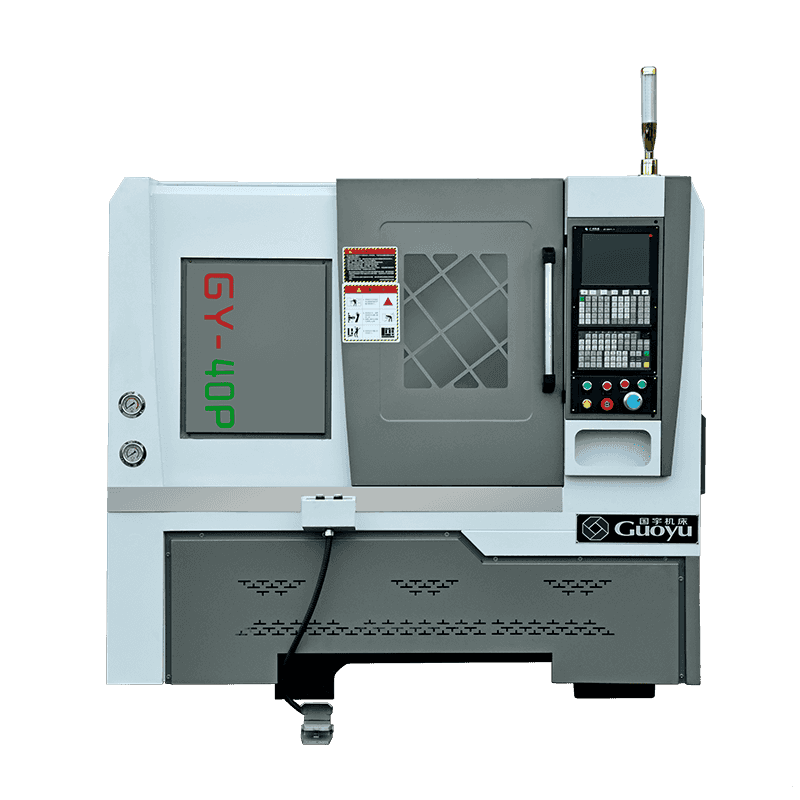
Technical Characteristics: 40P is a kind of small precision machine tool, that is suitable for the e...
See Details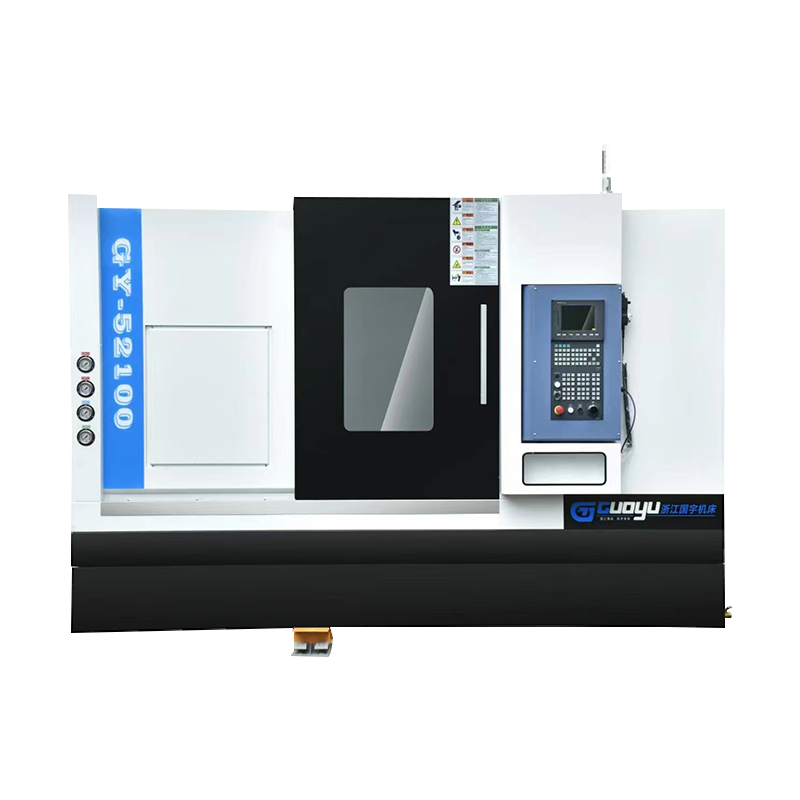
Technical Characteristics:Line Rail CNC lathes are integrally cast with 250 materials to ensure proc...
See DetailsOur team of digital and business experts will guide you to the right direction.
Let's Talk
Zhejiang Guoyu CNC Machine Tool Co., Ltd. relies on rich experience, professional technology and advanced methods to ensure the quality of its products, so that customers can enjoy more professional and thoughtful service.
 [email protected]
 +86-15356565970
 Xialiang Industrial Area, Luqiao District, Taizhou City, Zhejiang Province, China
Copyright © Zhejiang Guoyu CNC Machine Tool Co., Ltd. All Rights Reserved.