English
 中文简体
中文简体 русский
 Español

Technical Characteristics: The machine tool is a single-column vertical guideway structure. The colu...
See DetailsA Turret CNC Lathe with Tailstock integrates computerized numerical control (CNC) technology to coordinate spindle motion, axis positioning, turret indexing, and tailstock support. The CNC system functions as the operational core, converting programmed instructions into controlled mechanical movement. Its configuration directly affects machining accuracy, repeatability, cycle efficiency, and part consistency.
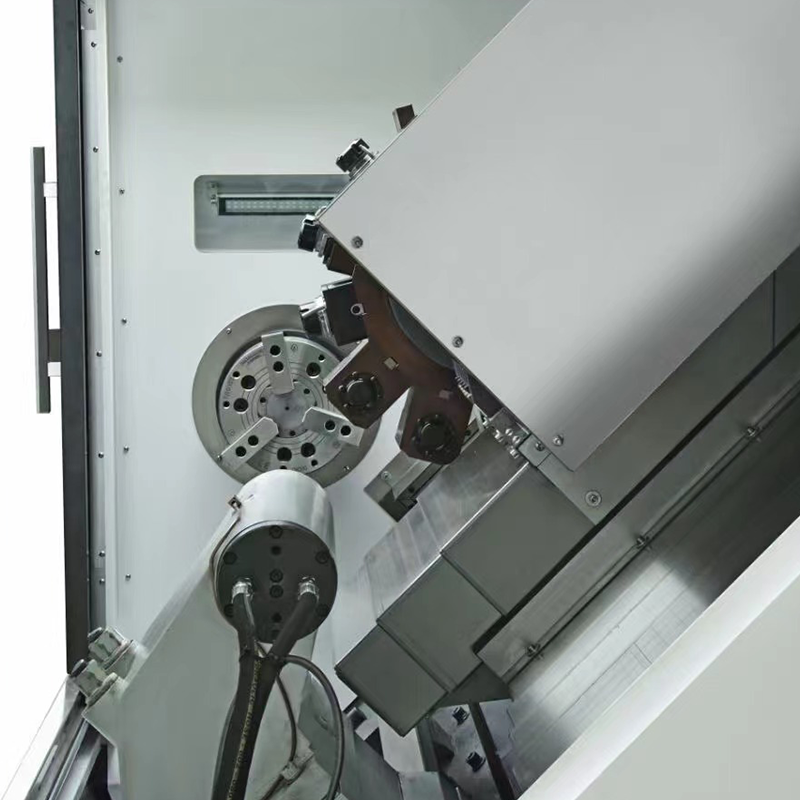
The CNC controller regulates the X-axis (radial movement) and Z-axis (longitudinal movement) through servo motors and ball screws. Feedback devices such as encoders transmit real-time position data, enabling closed-loop control. This reduces positioning error compared to open-loop systems and ensures dimensional stability across multiple cycles.
The turret indexing mechanism is also managed by the CNC system. Instead of manual tool changes, the controller commands rotational indexing to bring the required tool into cutting position. Tool offsets are digitally stored, allowing consistent depth control and automatic compensation for minor tool wear.
The tailstock is similarly integrated into the CNC framework. In programmable configurations, the tailstock quill can advance or retract automatically based on cycle requirements. This is particularly useful when machining long shafts that require axial support to prevent deflection under cutting load.
The following table summarizes how the CNC system influences major components:
|
Component |
CNC-Controlled Function |
Operational Impact |
|
Spindle |
Speed control and synchronization |
Stable cutting parameters |
|
X/Z Axes |
Servo-driven positioning |
Accurate dimensional control |
|
Turret |
Automatic indexing and tool offsets |
Reduced non-cutting time |
|
Tailstock |
Programmable advance and pressure control |
Improved support for long workpieces |
|
Coolant System |
Timed activation |
Consistent thermal management |
CNC programming enables complex cycles such as threading, taper turning, and grooving without manual recalibration. Parameters can be stored and reused, which supports batch production. CNC system transforms the turret lathe with tailstock into an automated machining platform with predictable performance and controlled mechanical coordination.
A Turret CNC Lathe with Tailstock increases productivity by automating tool changes and motion sequences. In a manual lathe, the operator must physically reposition tools and adjust feed rates. CNC programming eliminates repetitive manual intervention, reducing idle time between operations. This structured automation supports consistent cycle timing across multiple parts.
Repeatability is enhanced through digital control of spindle speed, feed rate, and axis positioning. Once a machining program is verified, identical components can be produced without recalculating dimensions. This reduces dimensional variation that may occur due to manual adjustments. The result is stable batch production suitable for industrial supply chains.
The integration of a programmable tailstock improves the machining of long shafts. Automatic quill positioning maintains axial support during cutting, reducing vibration and improving surface finish consistency. In manual systems, tailstock alignment relies heavily on operator skill and frequent checking.
Complex machining cycles can be executed in a single setup. Threading cycles, canned drilling routines, and contouring operations are pre-programmed, reducing the need for operator-based calculations. This increases operational continuity and allows one operator to supervise multiple machines when production planning permits.
Dimensional accuracy benefits from closed-loop servo systems. Position feedback continuously corrects deviation during axis travel. Manual lathes depend on handwheel graduations and operator perception, which may introduce cumulative error over extended runs.
Tool management is simplified through digital offset storage. Each turret station retains preset tool geometry data, reducing setup variability. In contrast, manual lathes require repeated measurement and manual compensation after tool changes.
Safety and monitoring functions are integrated into the CNC interface. Overtravel protection, spindle load monitoring, and alarm diagnostics help detect abnormal conditions. Manual lathes rely more heavily on direct operator observation, which may delay response to mechanical overload.
Data storage and program recall enable production traceability. Machining parameters can be archived and reused for future orders. This structured data management supports quality documentation requirements in industries such as automotive and mechanical component manufacturing.
The CNC system fundamentally shapes the operational characteristics of a Turret CNC Lathe with Tailstock. Through servo control, automated turret indexing, and programmable tailstock movement, the machine achieves coordinated precision and consistent production cycles. Compared to manual lathes, CNC-equipped turret lathes provide improved efficiency, repeatability, operational control, and process documentation. These characteristics make them suitable for structured manufacturing environments where accuracy and production stability are required.
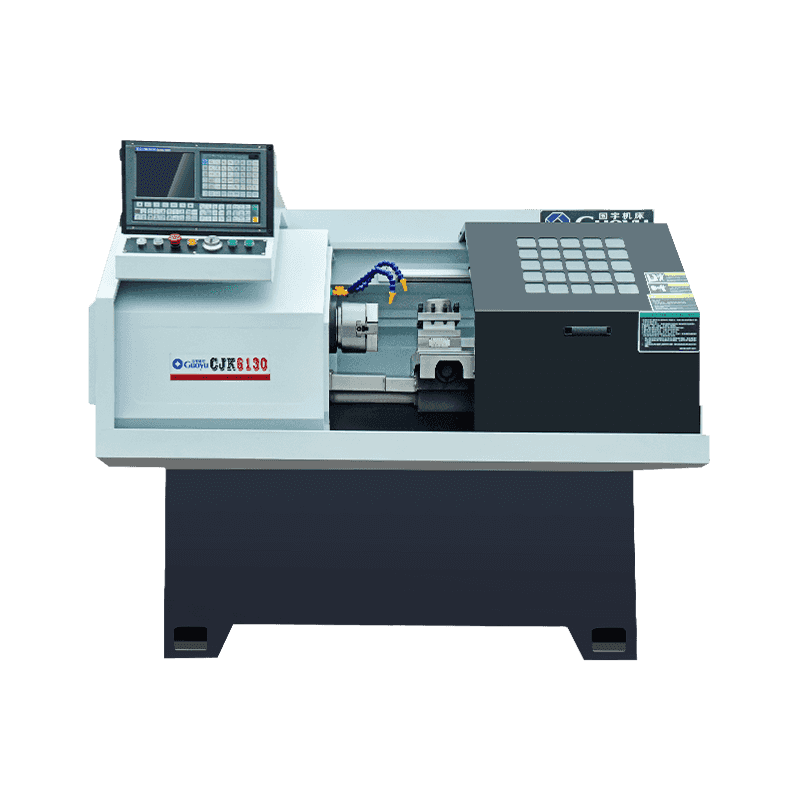
Technical Characteristics: The machine tool is a single-column vertical guideway structure. The colu...
See Details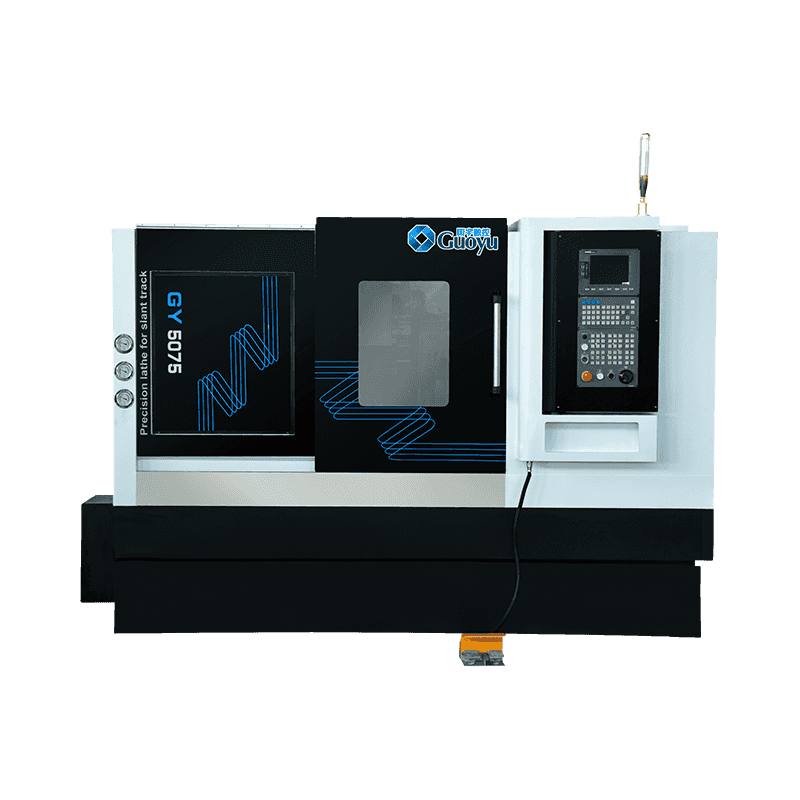
Technical Characteristics: The CNC machine tool for inclined beds adopts the domestic or imported hi...
See Details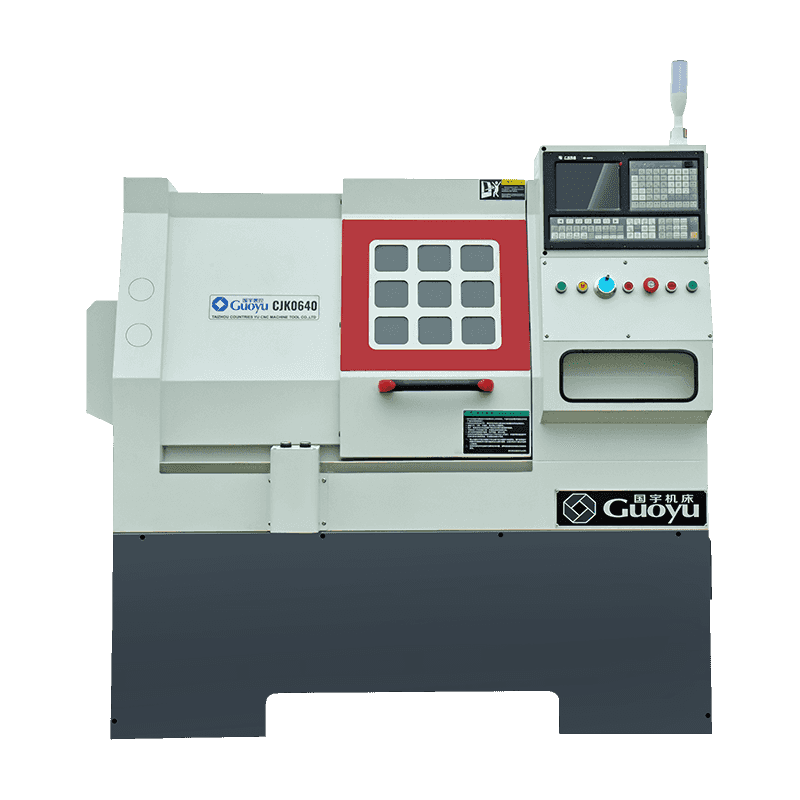
Technical Characteristics: The machine tool is equipped with a quantitative automatic lubrication sy...
See Details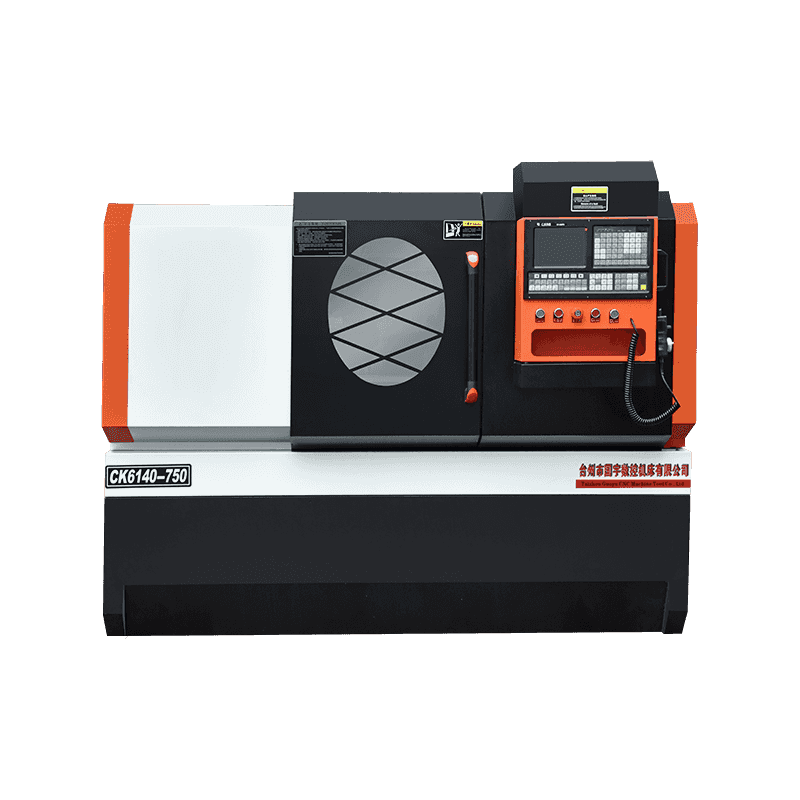
Technical Characteristics: It can cut all kinds of turning surfaces by bicycle, such as conical surf...
See Details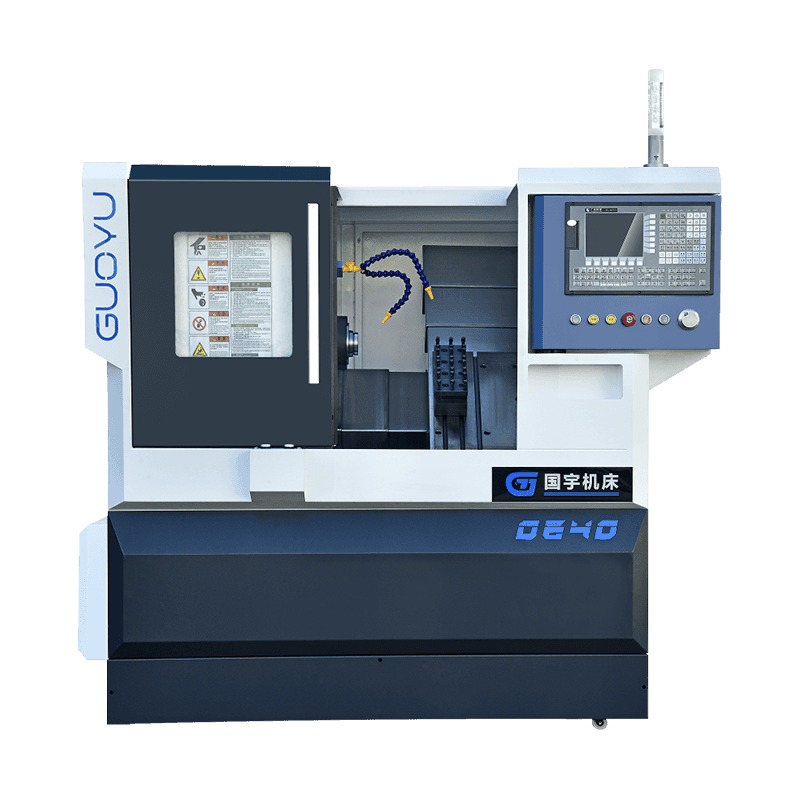
Introducing our Optional Control System CNC Lathe for Metal Processed, a sophisticated and reliable ...
See Details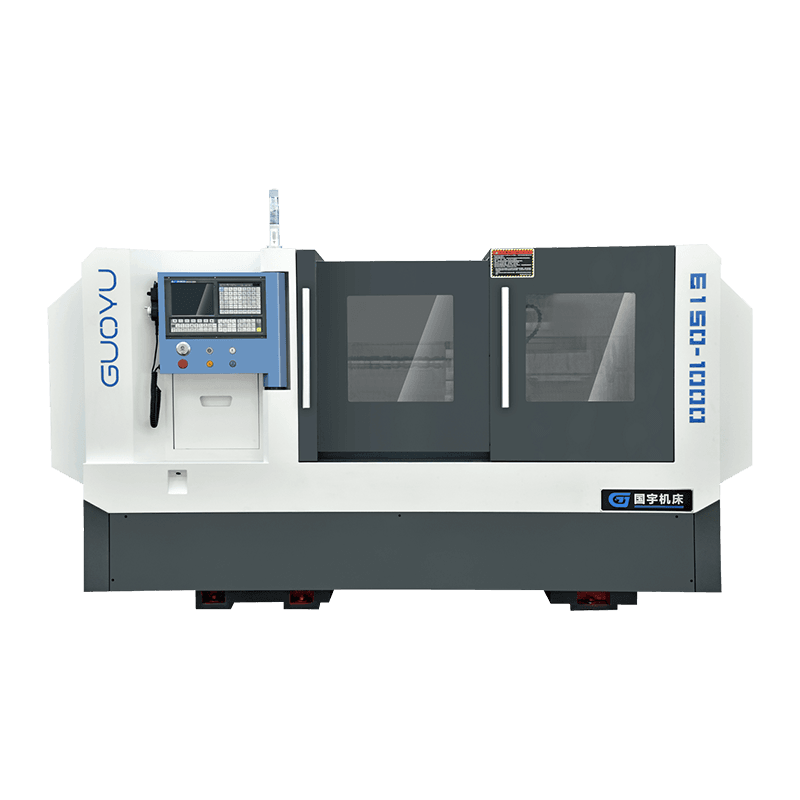
Technical Characteristics: It can cut all kinds of turning surfaces by bicycle, such as conical surf...
See Details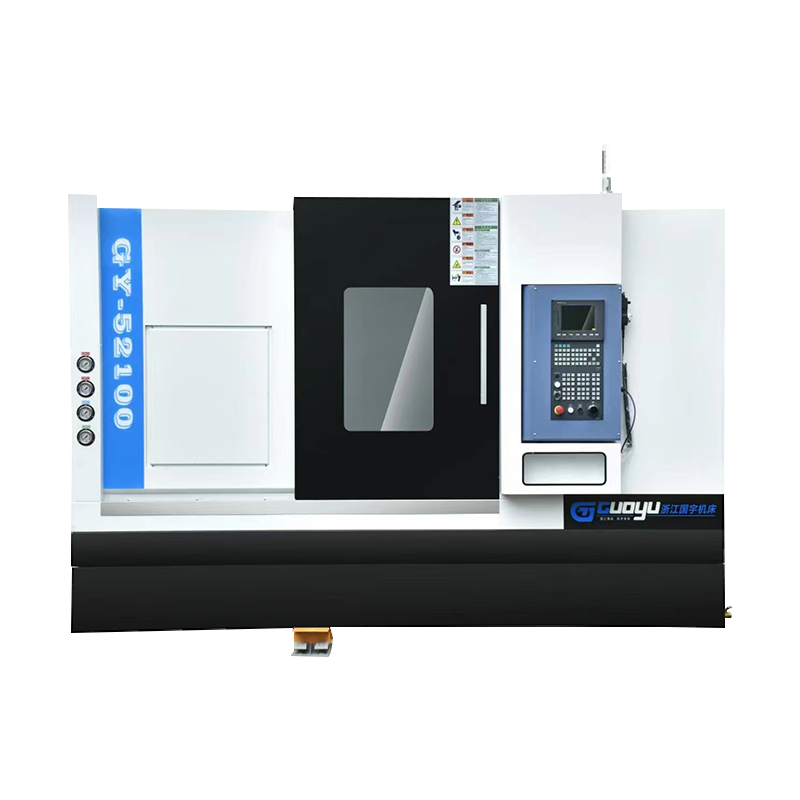
Technical Characteristics:Line Rail CNC lathes are integrally cast with 250 materials to ensure proc...
See Details
After-sales service commitment: 1. From the date of acceptance, the machine tool host is under warra...
See DetailsOur team of digital and business experts will guide you to the right direction.
Let's Talk
Zhejiang Guoyu CNC Machine Tool Co., Ltd. relies on rich experience, professional technology and advanced methods to ensure the quality of its products, so that customers can enjoy more professional and thoughtful service.
 [email protected]
 +86-15356565970
 Xialiang Industrial Area, Luqiao District, Taizhou City, Zhejiang Province, China
Copyright © Zhejiang Guoyu CNC Machine Tool Co., Ltd. All Rights Reserved.