English
 中文简体
中文简体 русский
 Español

Technical Characteristics: It can cut all kinds of turning surfaces by bicycle, such as conical surf...
See DetailsA heavy duty wood lathe is a machine tool designed for shaping wood by rotating it against a stationary cutting tool. Its "heavy duty" designation generally refers to a capacity for larger workpieces, increased power, greater mass for vibration damping, and more durable construction than benchtop or midi lathes. These machines serve professional woodturners, industrial workshops, and educational institutions where high-volume or large-scale turning is routine. Understanding this equipment involves examining its common types, its fundamental composition and function, and the maintenance practices required for safe operation.
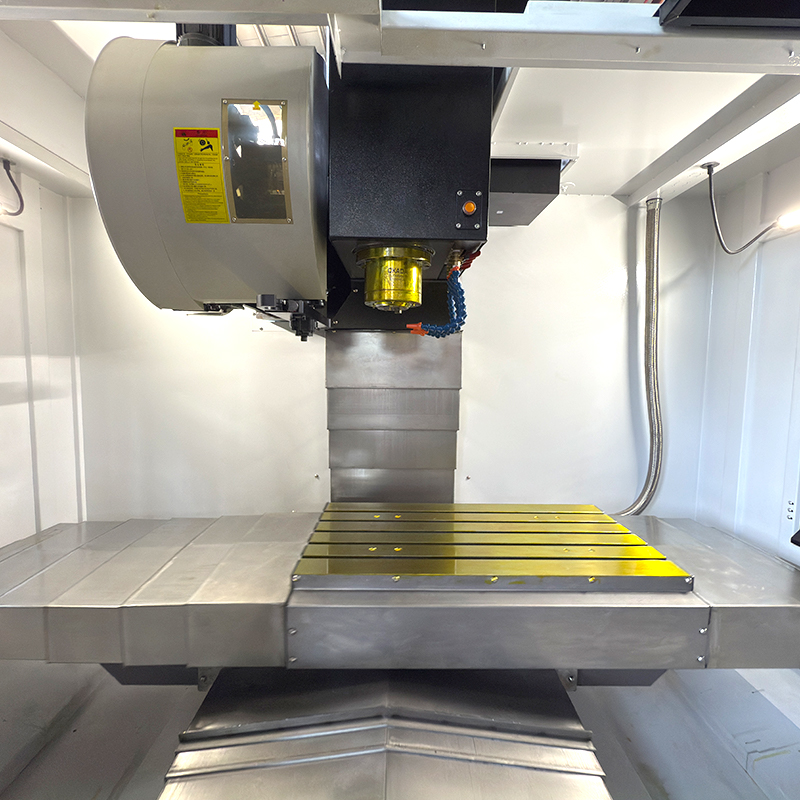
Heavy duty wood lathes are categorized primarily by their structural design and orientation, which determine their ideal applications.
Full-Size Floor Lathes (Gap Bed Lathes): This is the traditional and common type. It is a standalone unit with a headstock, tailstock, and tool rest mounted on a single, elongated bed made of cast iron or steel. Its defining feature is a "gap" in the bed near the headstock, which can be removed or bridged to accommodate outboard turning of wider, platter-style pieces beyond the standard bed's swing capacity. These lathes offer long bed lengths, often over one meter, for turning table legs, balusters, and other long spindles.
Swing-Away or Sliding Headstock Lathes: This design addresses the challenge of turning very wide, shallow items like large bowls or platters. Instead of a fixed headstock, the entire headstock assembly can be rotated or slid along the bed, or the tailstock can be repositioned. This reconfiguration allows the turner to mount a large blank that would otherwise collide with the bed, effectively using the lathe in a "outboard" configuration with the tool rest mounted on a separate stand.
Variable-Speed Direct-Drive Lathes: These modern lathes use an electronic variable-speed control (often with a digital readout) paired with a motor that drives the headstock spindle directly or via a serpentine belt in a sealed compartment. They eliminate manual belt changes for speed adjustment, providing a wide speed range from very low (below 100 RPM for large unbalanced blanks) to high (over 2000 RPM for finishing small spindles) at the turn of a dial. This type prioritizes operational convenience and precision.
Industrial Production Lathes: Designed for high-volume manufacturing of identical parts, such as chair legs or baseball bats. They often feature replicating attachments (duplicators), programmable controls, and specialized tooling to automate the turning process. While less common in artisan shops, they represent the upper end of heavy-duty capability in terms of power and specialized function.
The functionality of a heavy duty wood lathe arises from the integrated operation of its core mechanical and structural components.
Structural Framework: Bed and Stand
The bed is the lathe's foundation, a rigid beam (usually cast iron) that provides a precise, flat, and vibration-resistant track for the movable components. Its length determines the maximum distance between centers (spindle length), and its height, coupled with a heavy steel or welded stand, positions the workpiece at a functional working height. The mass of the bed and stand is crucial for absorbing the rotational forces and imbalances inherent in turning large wood blanks.
Drive and Rotation System: Headstock
The headstock is the powered end of the lathe, permanently fixed to one end of the bed. It houses a powerful electric motor (typically 2 horsepower or more), a drive train (often using multiple V-belts and pulleys or an electronic variable-speed controller), and the main spindle. The spindle nose has a standardized threading (like 1"-8 TPI or M33) to accept chucks, faceplates, and drive centers. Its primary function is to provide controlled rotational power to the workpiece.
Support and Alignment Components: Tailstock and Tool Rest
The tailstock is a movable unit that slides along the bed and can be locked in position. It contains a quill that advances via a handwheel, pressing a non-rotating center (like a live center) into the end of a spindle workpiece. This provides critical support to counteract the pressure of the cutting tool, reducing vibration and increasing safety. The tool rest, comprising a base and a banjo, is also movable and lockable. It presents a steady, adjustable platform upon which hand-held turning tools are leveraged during the cutting process.
Proper maintenance and adherence to safety protocols are necessary for the longevity of a heavy duty wood lathe and the safety of its operator.
Routine Maintenance Tasks
Essential Safety Precautions
Personal Protective Equipment (PPE): Always wear safety glasses that shield the eyes from the front and sides. Use a face shield when roughing out large, unbalanced blanks. Avoid loose clothing, gloves, and jewelry; secure long hair.
Workpiece Security: Ensure the wood blank is securely mounted. For faceplate work, use sufficiently large screws. For spindle turning between centers, ensure the workpiece is firmly engaged by both the drive center and the tailstock center. A loose workpiece can become a dangerous projectile.
Tool Technique & Speed: Always keep the tool rest as close as possible to the workpiece (approximately 1/8 inch gap) and adjust it as the workpiece diameter changes. Use an appropriate rotational speed: lower speeds for large-diameter or unbalanced blanks, higher speeds for smaller, balanced spindles. Never start the lathe with the tool in contact with the wood.
Machine State: Never leave the lathe running unattended. Before making adjustments to the tool rest, tailstock, or changing speed settings, always bring the machine to a complete stop. Ensure the workpiece has fully stopped before attempting to measure it or remove it from the lathe.
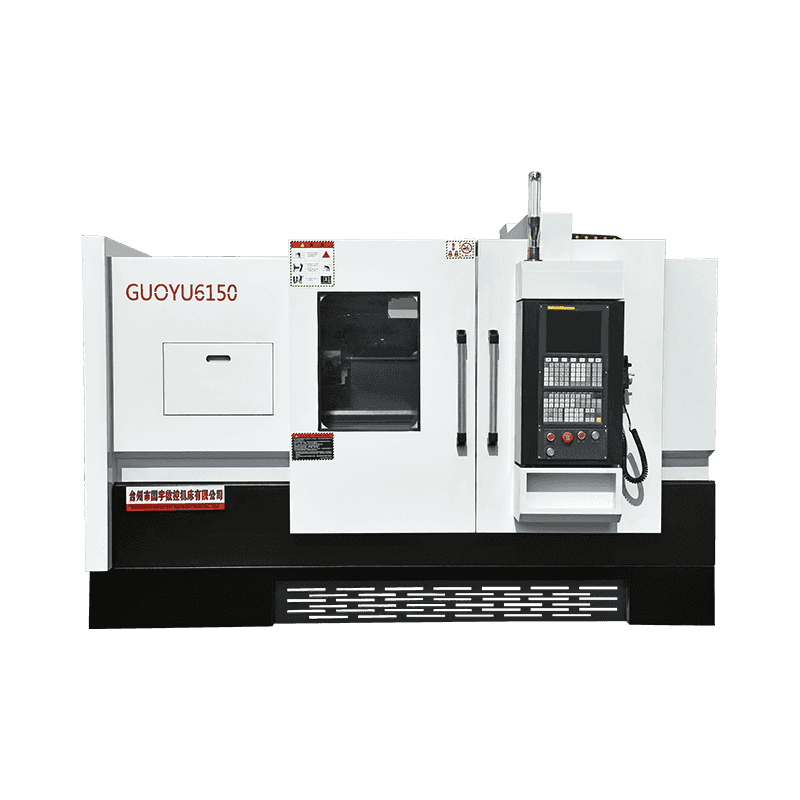
Technical Characteristics: It can cut all kinds of turning surfaces by bicycle, such as conical surf...
See Details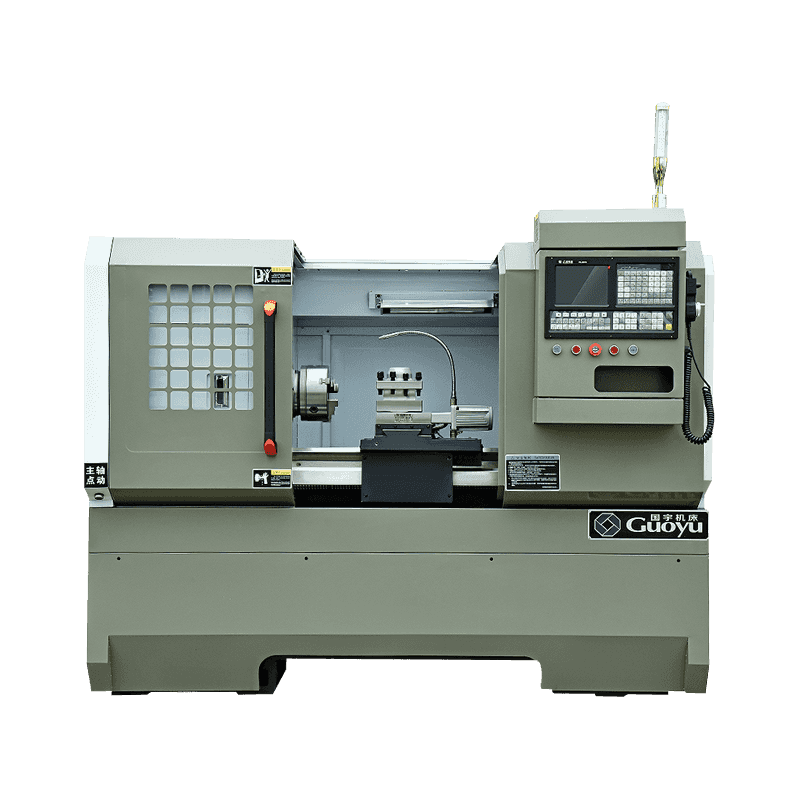
Technical Characteristics: It can cut all kinds of turning surfaces by bicycle, such as conical surf...
See Details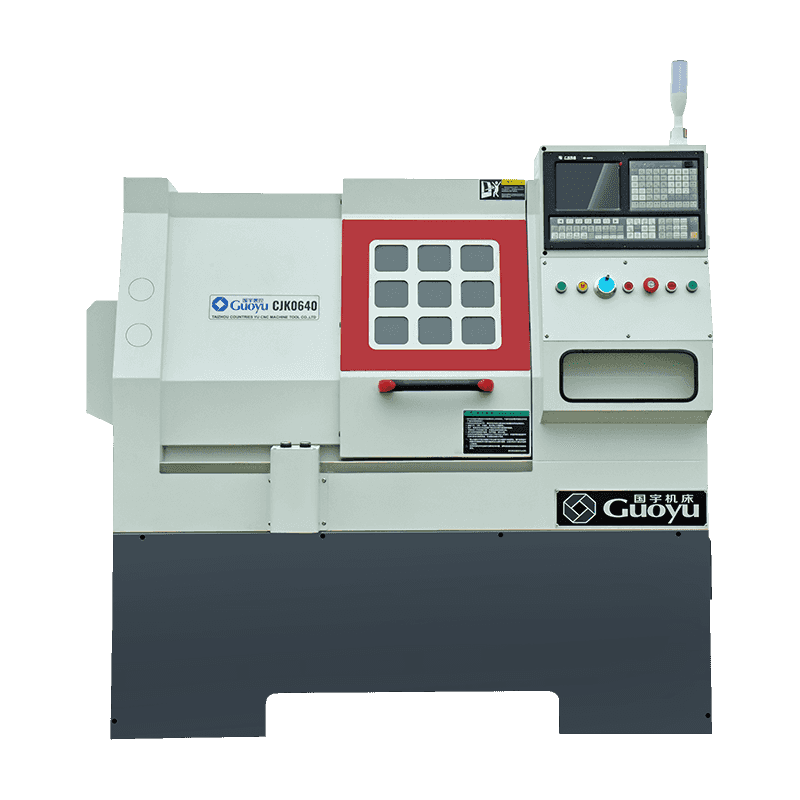
Technical Characteristics: The machine tool is equipped with a quantitative automatic lubrication sy...
See Details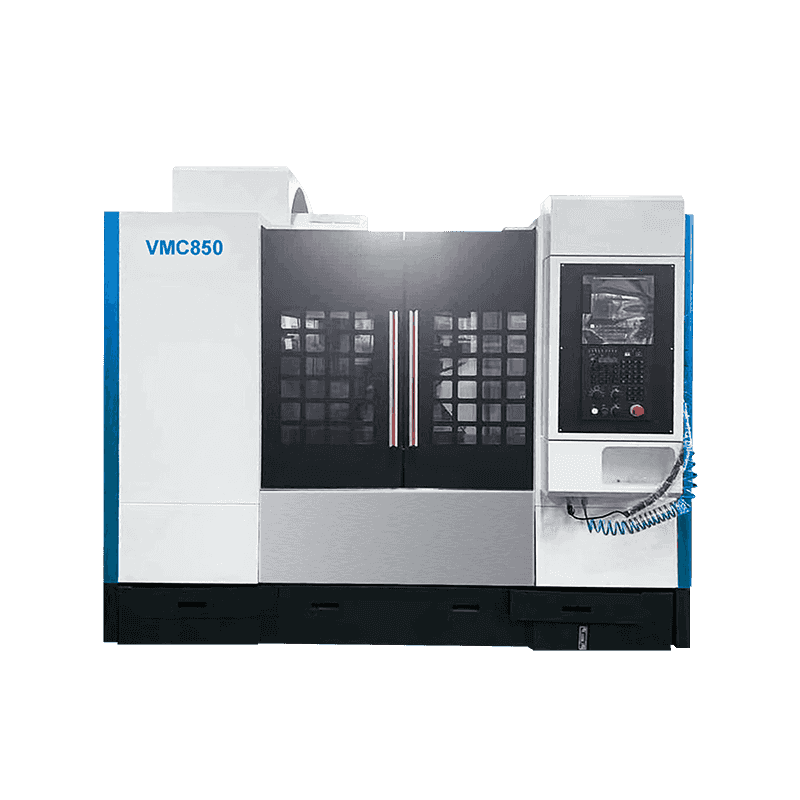
Technical Characteristics The machine tool is a single-column vertical guideway structure. The colum...
See Details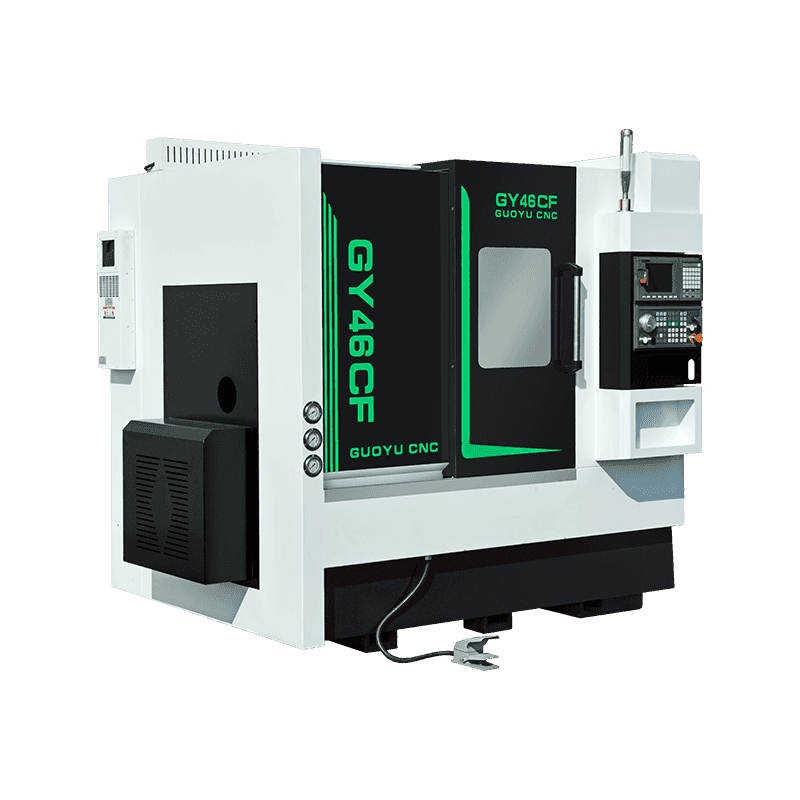
The 4+4 Type Precision CNC Lathe With Conjoined Oblique Rail Cutter Tower is a really practical, mul...
See Details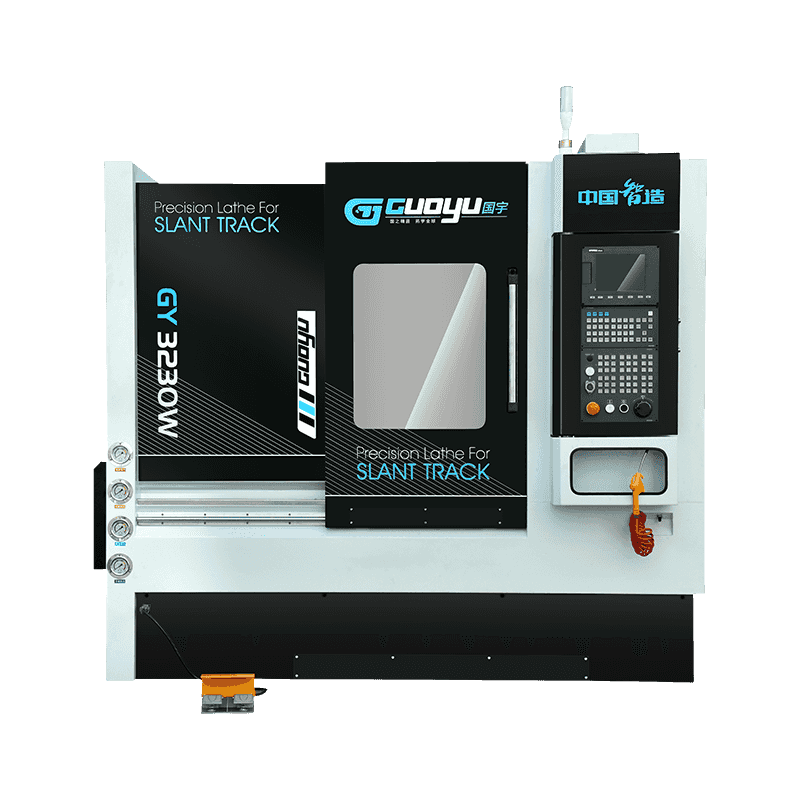
Technical Characteristics: The machine tool is of high precision, and the spindle is supported by hi...
See Details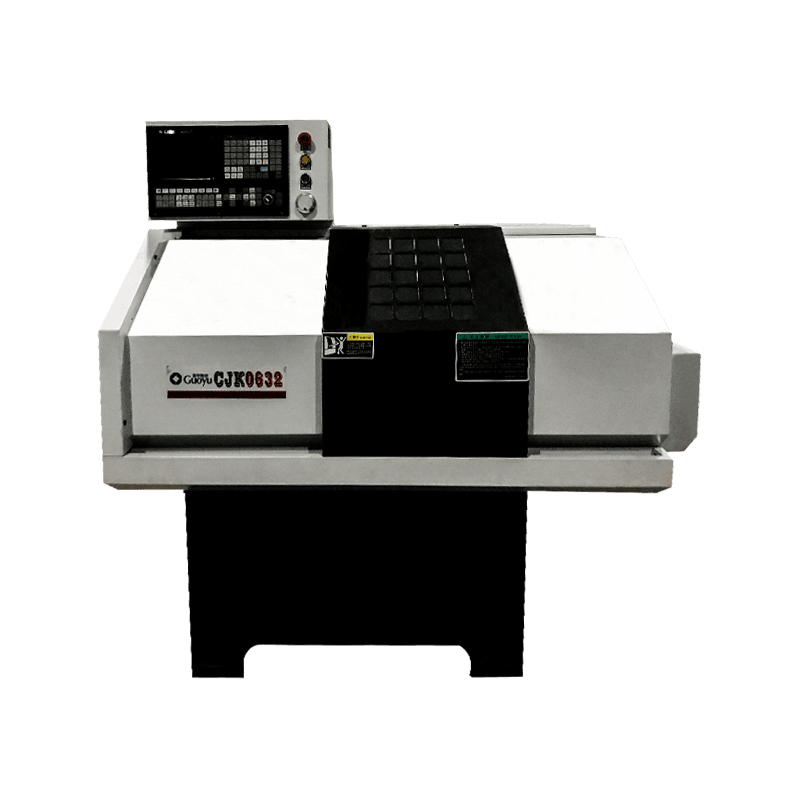
The Precision Line Rail Precision CNC Lathe is a completely practical machining choice if you want t...
See Details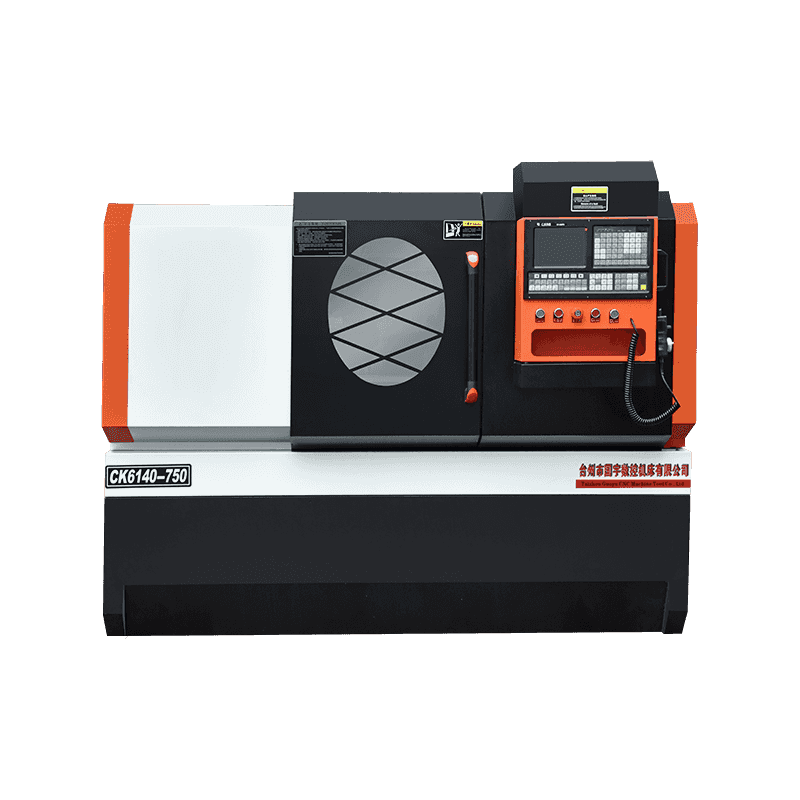
Technical Characteristics: It can cut all kinds of turning surfaces by bicycle, such as conical surf...
See DetailsOur team of digital and business experts will guide you to the right direction.
Let's Talk
Zhejiang Guoyu CNC Machine Tool Co., Ltd. relies on rich experience, professional technology and advanced methods to ensure the quality of its products, so that customers can enjoy more professional and thoughtful service.
 [email protected]
 +86-15356565970
 Xialiang Industrial Area, Luqiao District, Taizhou City, Zhejiang Province, China
Copyright © Zhejiang Guoyu CNC Machine Tool Co., Ltd. All Rights Reserved.