English
 中文简体
中文简体 русский
 Español

The Conjoined 35° Oblique Rail Cutter Tower Tail Seat Precision CNC Lathe is a really practical mach...
See DetailsVibration during deep cuts, tool deflection on harder materials, and dimensional drift across a long production run — these are not isolated incidents in heavy-duty metal machining. They are symptoms of a machine structure that was not designed for the load it is being asked to carry. When the work involves steel, cast iron, alloy billets, or large mold blanks, the rail system underneath the machine becomes the deciding factor in whether the cut holds its line or accumulates error. A Hard Rail CNC Machine is built around a specific answer to this problem: higher contact area between the moving axis and the rail, greater resistance to lateral and vertical forces, and a structural rigidity that keeps the tool path stable under conditions that would flex a lighter design.
A Hard Rail CNC Machine uses box-way or flat-way guide rails machined directly into the machine bed or column. The carriage rides on a broad, flat contact surface rather than on rolling elements. This contact surface is typically scraped or ground to high precision, then hardened — which is where the "hard rail" designation originates.
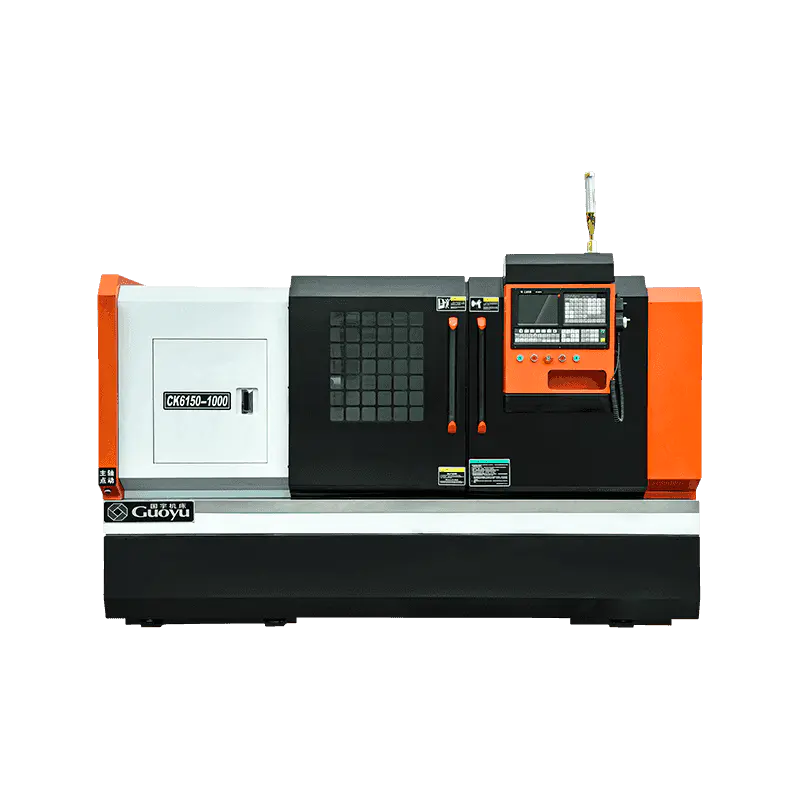
The distinguishing structural characteristics are:
These properties are not incidental. They are the functional reason hard rail configurations remain in use for heavy-duty machining even as linear rail technology has become widespread for other applications.
Understanding the structural difference explains why the two configurations suit different applications.
Linear rail systems use recirculating ball or roller bearings between the carriage and the rail. This produces low friction and allows high traverse speeds with good repeatability under light to moderate loads. In precision finishing, high-speed machining, and applications where feed rate matters more than cutting force capacity, linear rail performs well.
Hard rail systems use direct surface contact. The friction is higher, which limits rapid traverse speed, but the load-bearing capacity and resistance to vibration are significantly greater. Under heavy cutting conditions:
Neither design is universally better — the choice depends on what the machine will be asked to do.
In light machining, rail compliance is not a significant concern. The cutting forces are small enough that even a system with some flex will hold its position within acceptable tolerance.
In heavy-duty cutting, this changes. Deep passes in steel or cast iron generate forces that act on the tool, the spindle, the carriage, and the rail simultaneously. If the rail system yields under that force — even by a small amount — the resulting position error shows up as dimensional deviation, surface finish degradation, or chatter marks on the part.
The specific failure modes associated with insufficient rail rigidity in heavy-duty work include:
A hard rail structure resists all three by maintaining the carriage position against the forces being applied.
Mold manufacturing involves large steel or tool steel blanks machined to tight tolerances across broad surfaces. The combination of hard material and large part size produces sustained cutting forces that require the machine structure to remain stable throughout the operation. Hard rail construction maintains positional accuracy across long passes without the carriage yielding under load.
Structural and powertrain components — housings, brackets, cylinder heads, knuckles — often involve significant material removal from cast iron or aluminum alloy. Volume production adds the requirement that dimensional consistency holds not just across a single part but across thousands of parts over the life of the setup. Rail rigidity contributes directly to that consistency.
Large machine bases, frames, plates, and fixture components require aggressive material removal from solid stock. The cuts are deep, the feeds are high, and the machine needs to absorb the resulting forces without deflection. This is the application context where hard rail construction is clearly differentiated from lighter alternatives.
Even on parts that will eventually require fine finishing, the roughing stage involves heavy stock removal. Using a hard rail machine for rough machining preserves tool life and dimensional control during the stage where cutting forces are at their peak, reducing the corrective work required in subsequent operations.
Functional trade-offs exist between the two configurations — neither is categorically preferable, but the differences become significant when the work involves sustained heavy loads.
This question comes up regularly, and the answer requires some clarification. Hard rail machines are not inherently less precise than linear rail machines. What they sacrifice is rapid traverse speed and, in some configurations, the ability to achieve very fine positioning increments without backlash compensation.
For heavy-duty work, however, precision in the meaningful sense — holding dimensional tolerance under cutting load — is where hard rail construction has an advantage. A machine that positions accurately at low feed but deflects under cutting force does not hold its stated tolerance in practice. A hard rail machine that is well-maintained and properly set up will hold its tolerance throughout the cut because the rail contact resists the forces that would otherwise move the carriage off its programmed path.
The distinction is between:
Hard rail construction addresses the second condition more reliably than lighter alternatives.
Hard rail systems require consistent lubrication and periodic inspection of the rail and carriage surfaces. The maintenance requirements are predictable and manageable, but they cannot be neglected without affecting performance.
Key maintenance practices:
The ability to restore rail geometry through scraping is one of the practical longevity advantages of hard rail construction in heavy-duty production environments.
The decision is not universal. A few questions help frame whether hard rail construction matches the actual requirements:
Rail system choice does not exist in isolation. The benefits of hard rail construction are fully realized when the rest of the machine structure matches its capability.
Selecting the right CNC machine structure for heavy-duty cutting comes down to matching the machine's mechanical characteristics to the forces the work actually generates. A Hard Rail CNC Machine provides the rigidity, damping, and load-bearing capacity that heavy material removal requires — not as a theoretical specification, but as a practical difference in how the machine performs under the cutting conditions that matter. For manufacturers working with large molds, structural components, or high-volume production of machined metal parts, the structural choice affects not just cut quality but tool life, dimensional consistency, and machine longevity. Zhejiang Guoyu CNC Machine Tool Co., Ltd. manufactures hard rail CNC machining centers for heavy-duty industrial applications, with configurations suited to mold work, structural part production, and high-load metal cutting. If you are evaluating machine specifications for a current or planned production line, or comparing hard rail and linear rail options for a specific application, reaching out to their technical team is a practical way to assess which configuration matches your actual cutting requirements.

The Conjoined 35° Oblique Rail Cutter Tower Tail Seat Precision CNC Lathe is a really practical mach...
See Details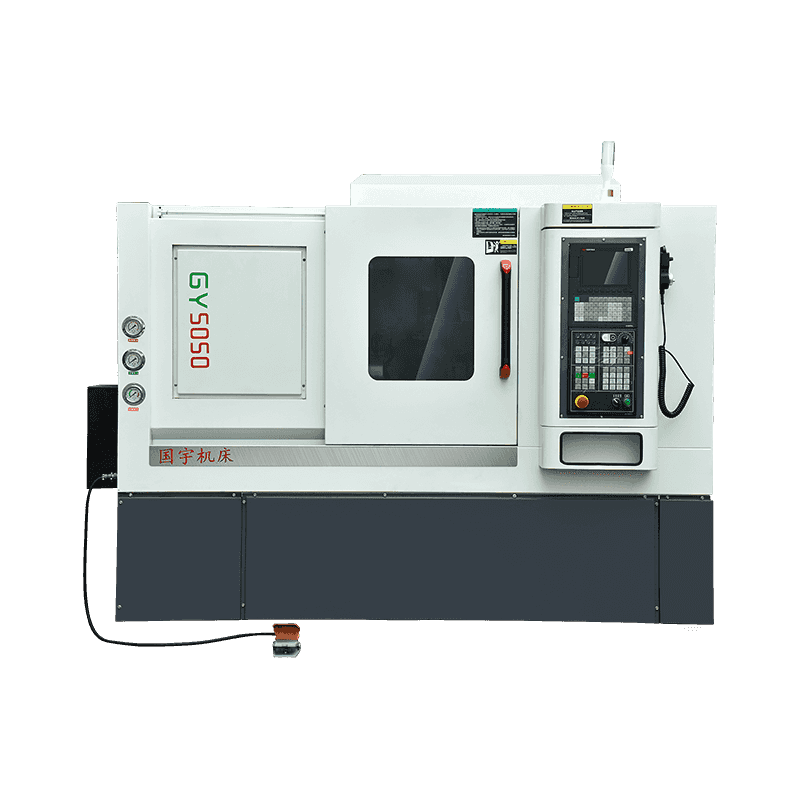
Technical Characteristics: The machine tool is of high precision, and the spindle is supported by hi...
See Details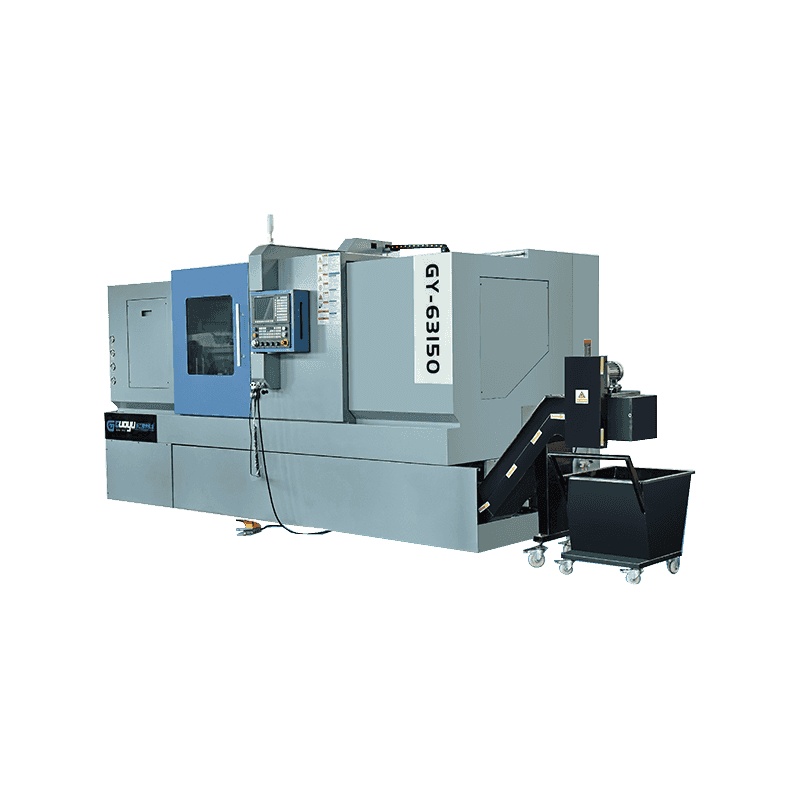
The Precision CNC Lathe With Programmable Tailstock For Connected Inclined Rail Tool Tower is just a...
See Details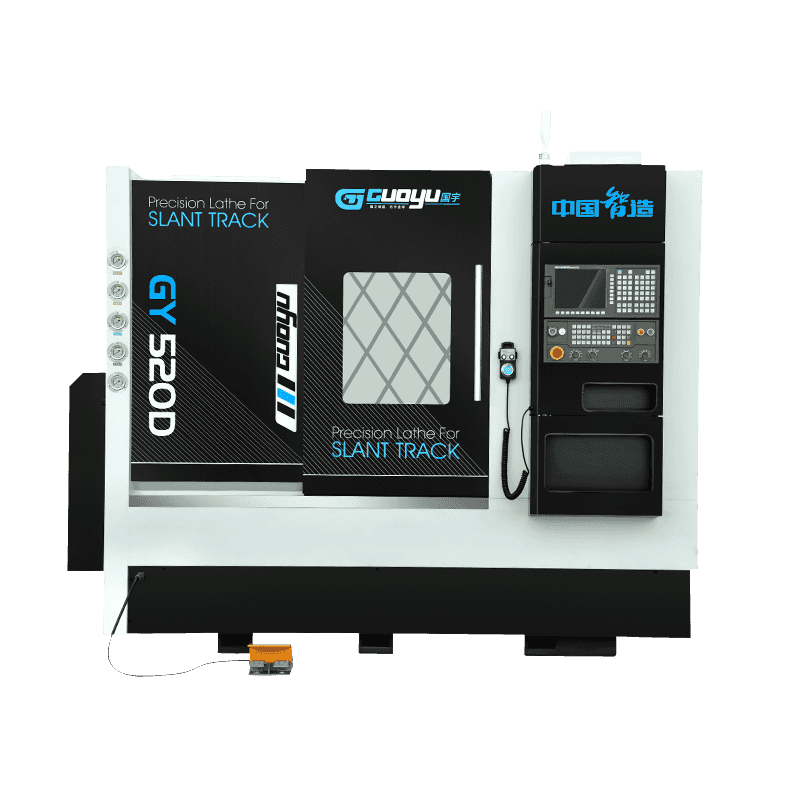
Technical Characteristics: The CNC machine tool for inclined beds adopts the domestic or imported hi...
See Details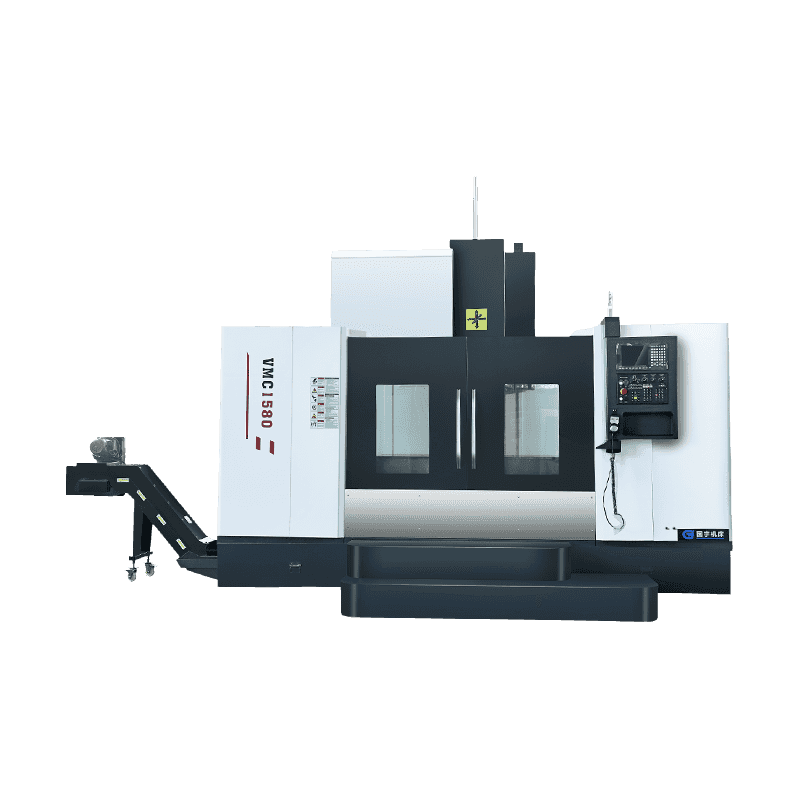
We are pleased to present the VMC1580 High-Speed Vertical Machining Center, a reliable and efficient...
See Details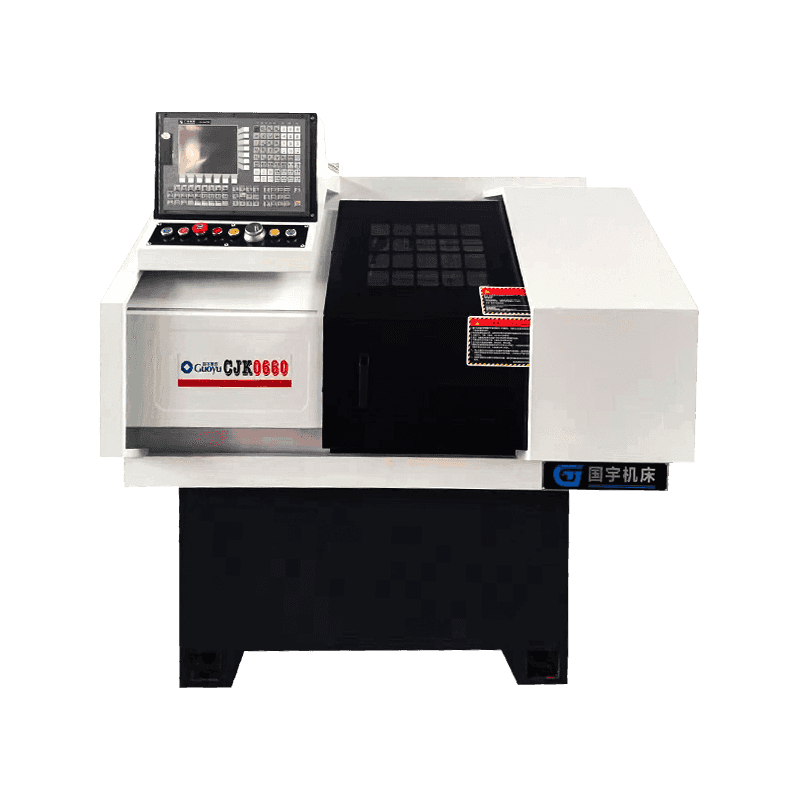
The Custom Precision Line Rail Precision CNC Lathe is just a really practical, compact machining sol...
See Details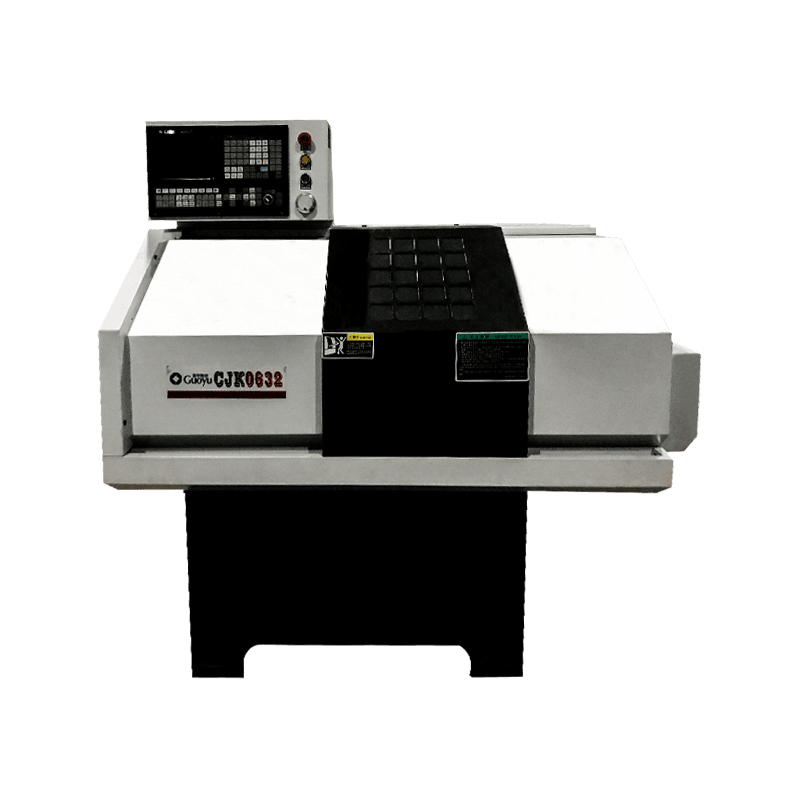
The Precision Line Rail Precision CNC Lathe is a completely practical machining choice if you want t...
See Details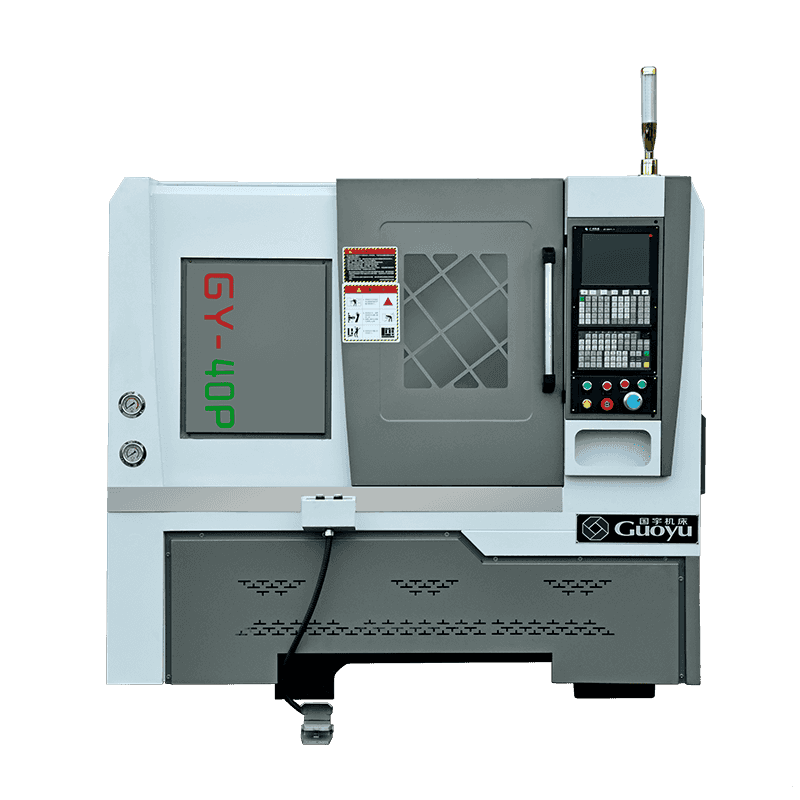
Technical Characteristics: 40P is a kind of small precision machine tool, that is suitable for the e...
See DetailsOur team of digital and business experts will guide you to the right direction.
Let's Talk
Zhejiang Guoyu CNC Machine Tool Co., Ltd. relies on rich experience, professional technology and advanced methods to ensure the quality of its products, so that customers can enjoy more professional and thoughtful service.
 [email protected]
 +86-15356565970
 Xialiang Industrial Area, Luqiao District, Taizhou City, Zhejiang Province, China
Copyright © Zhejiang Guoyu CNC Machine Tool Co., Ltd. All Rights Reserved.